
The Upper West Side
More Than a Neighborhood. The Upper West Side is my home.
I've called the Upper West Side home for years, first at Lincoln Towers and now a few blocks north. It's also where much of my real estate business is centered. It’s also true that 26 years ago my very first New York City rental was on the Upper West Side.

But knowing the Upper West Side means more than knowing the latest price per square foot.
It's understanding why one block can feel completely different from the next. It's knowing the great prewar buildings along Central Park West, the classic co-ops of West End Avenue and Riverside Drive, the condos that have reshaped parts of Broadway, and the sprawling Lincoln Towers community tucked between Broadway and the Hudson.
It's also knowing where to get a great cup of coffee or cocktail depending on time of day, which buildings have fascinating stories behind them, and why people who fall in love with this neighborhood often don't want to leave.
I'm a real estate advisor with Compass, a longtime Upper West Side resident, and slightly obsessed with running. I created New York's New York to share my curiosity about this city with you.
A Neighborhood of Neighborhoods
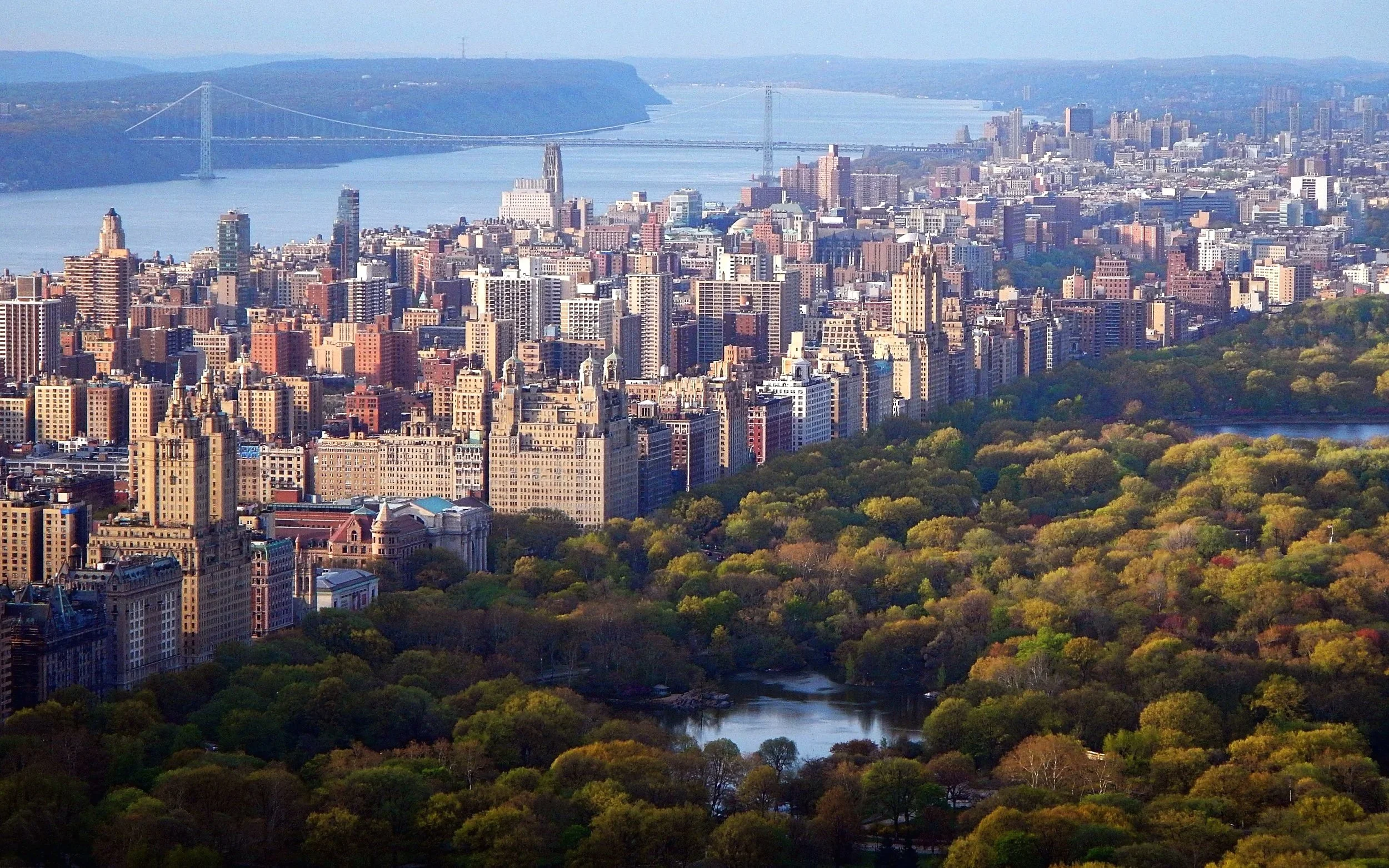
One of the things that makes the Upper West Side unique is the way Broadway cuts diagonally through Manhattan's street grid as it makes its way north.
Along the way, it creates wide intersections and triangular public spaces that open up the neighborhood, let in sunlight and offer some wonderful views of the area's amazing architecture. At times, it feels like a European city. But what I really love about the Upper West Side is that it isn't one neighborhood. It's a collection of smaller neighborhoods, each with its own personality.
Lincoln Center & the West 60s
Starting at the southern end, Columbus Circle is the entry point to the Upper West Side and one of its gateways into Central Park, a cornerstone of the neighborhood.
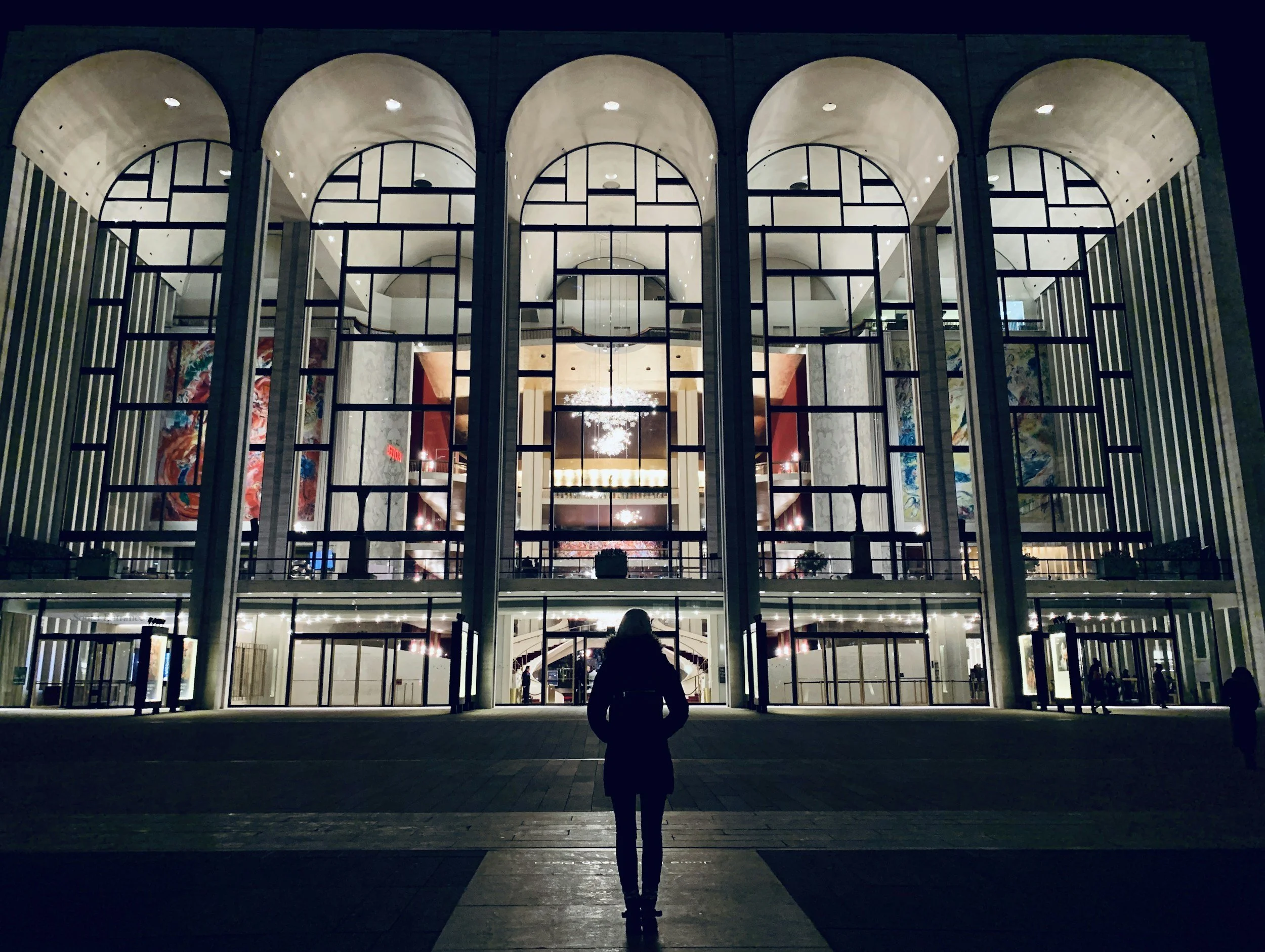
From there, you quickly reach Lincoln Center, the cultural anchor of this part of the Upper West Side. The Empire Hotel, the farmers market at Richard Tucker Park and restaurants like The Smith and Fiorello's all contribute to the energy of the area.
On most evenings, you'll find the restaurants bustling with people grabbing dinner before an opera, ballet or concert at Lincoln Center. There's an energy here that's distinctly New York, with residents, performers, tourists and concertgoers all mixing together within a few blocks. Make a reservation ahead of time if you plan on participating.
The real estate is equally varied. Classic prewar co-ops line Central Park West, while newer condominiums can be found closer to Broadway and Columbus Avenue. Head west behind Lincoln Center and you'll find Lincoln Towers, the sprawling mid century residential complex that almost feels like its own neighborhood within the neighborhood. My wife and I lived there as well.
The West 70s
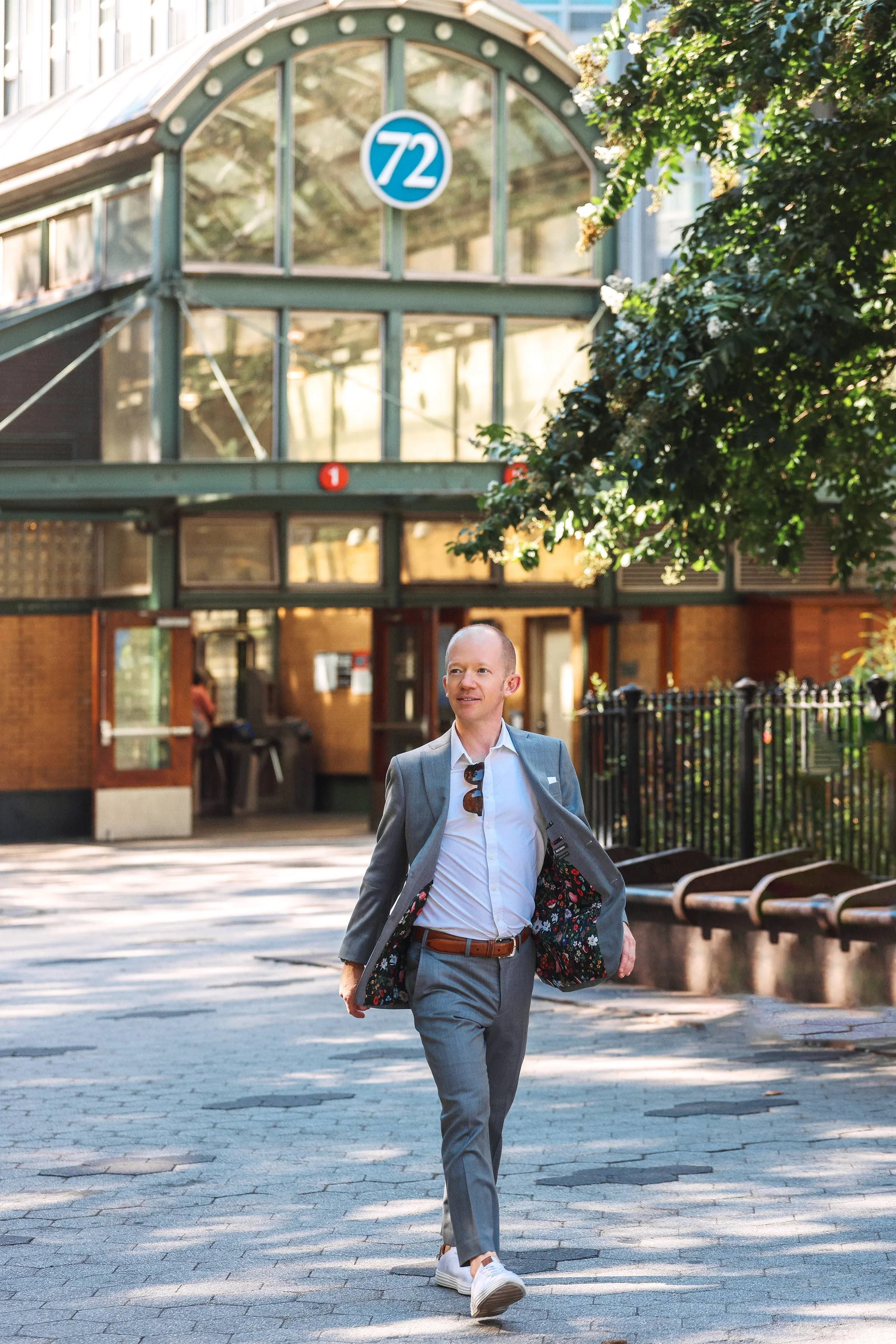
The backbone of the West 70s is, of course, the amazing and super speedy 72nd Street 1/2/3 subway station. In my opinion, it’s one of the best subway stops in the city. Hop on the express train, you can be downtown in the West Village in about 15 minutes.
Trader Joe’s is right across the street, and people actually travel to the neighborhood just to shop there. But this is also an area where you’re spoiled for choice when it comes to food shopping. Fairway, Citarella and Zabar’s are all nearby, giving the West 70s some of the best markets in the city.
72nd Street also acts as an artery connecting the Upper West Side’s two great parks. Head west and you’ll find yourself in Riverside Park and along the Hudson River. Walk east, past the monumental Dakota, and you arrive at Central Park.
Then there’s the Beacon Theatre, a neighborhood landmark and a place that seems to have something happening almost every night, whether it’s a concert, comedy show or live discussion.
The residential streets between all of this are a big part of what makes the West 70s so special. Step away from Broadway and you quickly find beautiful brownstones, classic prewar co-ops and tree lined blocks that can feel surprisingly quiet considering everything happening just a few avenues away.
The West 80s
One of the most noticeable differences as you make your way into the West 80s is the abundance of bars and restaurants. My wife and I often walk up here for dinner simply because there are so many options.
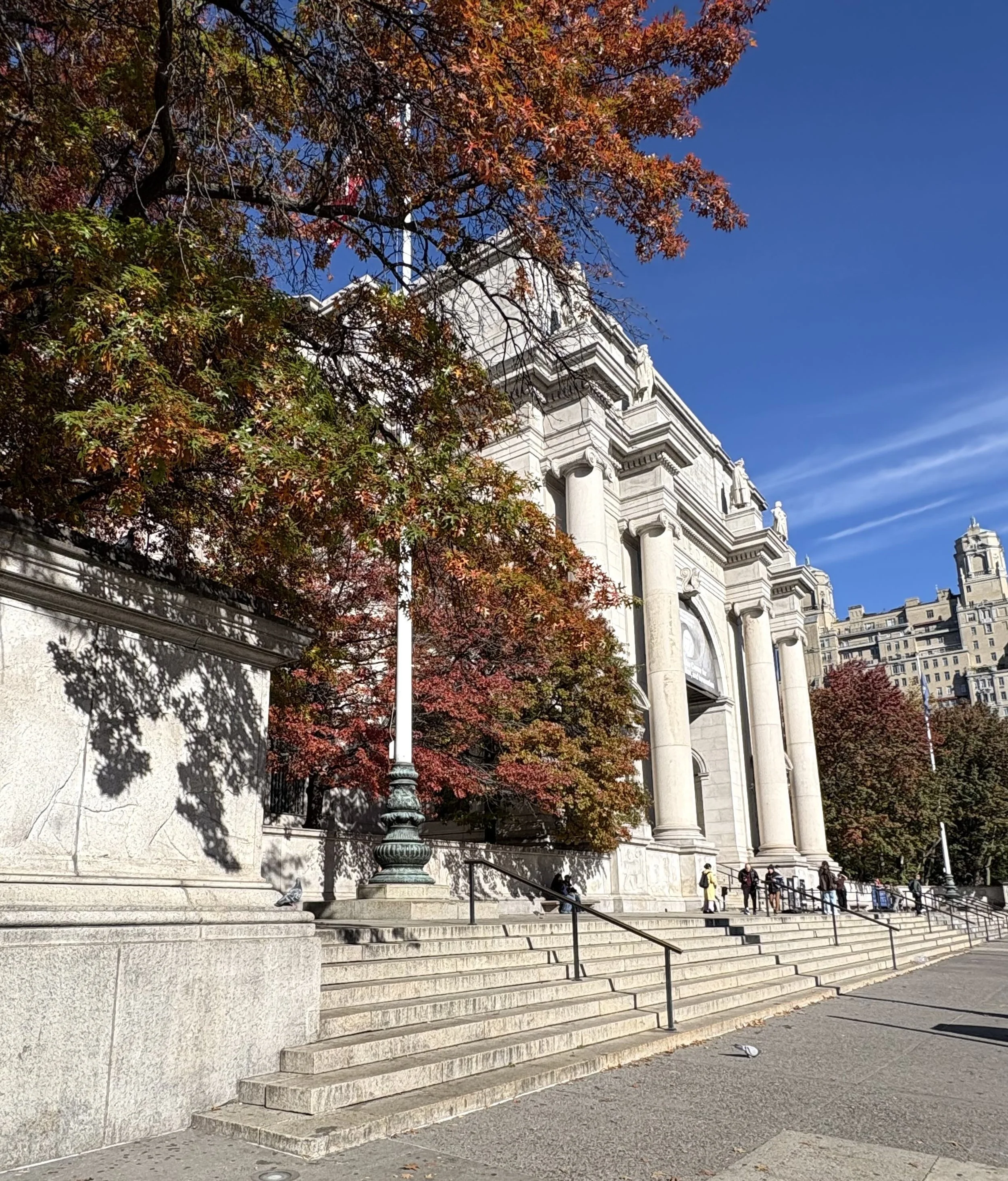
One of the Upper West Side's most famous landmarks and cultural institutions is here as well, the American Museum of Natural History. Every Sunday, the 79th Street Greenmarket takes over Columbus Avenue along the museum's western side, bringing local farmers and producers into the neighborhood. It's a fantastic place to pick up fresh produce and something my wife and I do almost every weekend.
A lesser publicized cultural institution nearby deserves a mention, especially given how much I love New York City history. The New York Historical, formerly known as the New York Historical Society, was founded in 1804 and is New York City's oldest museum. It always has a fantastic rotation of exhibitions.
Almost every block in the West 80s seems to be lined with classic brownstones, giving this part of the neighborhood a more intimate and residential feel.
Riverside Drive & West End Avenue
Along the far western edge of the neighborhood run West End Avenue and Riverside Drive. Even though both travel south to north through many of the areas mentioned above, to me they almost feel like a neighborhood of their own.
West End Avenue, with its wide roadway and two way traffic, is what I consider the Park Avenue of the Upper West Side. It’s lined with classic prewar co-ops, many of them architecturally stunning.
Rosario Candela, who may be more closely associated with the grand apartment houses of Park and Fifth Avenues, left a significant mark on the Upper West Side as well, designing a dozen gorgeous apartment buildings along West End Avenue.
For anyone who loves New York architecture, walking West End Avenue can feel like an architectural tour hiding in plain sight.
Then there’s Riverside Drive, which winds its way north alongside Riverside Park and feels completely different from the rest of the neighborhood. Here you’ll find grand prewar co-ops overlooking the park and Hudson River, along with a handful of surviving private homes that offer a glimpse into an earlier era of the Upper West Side. Among them are the Isaac L. and Julia B. Rice Mansion and the Schinasi Mansion.
The Upper West Side has two parks

Central Park
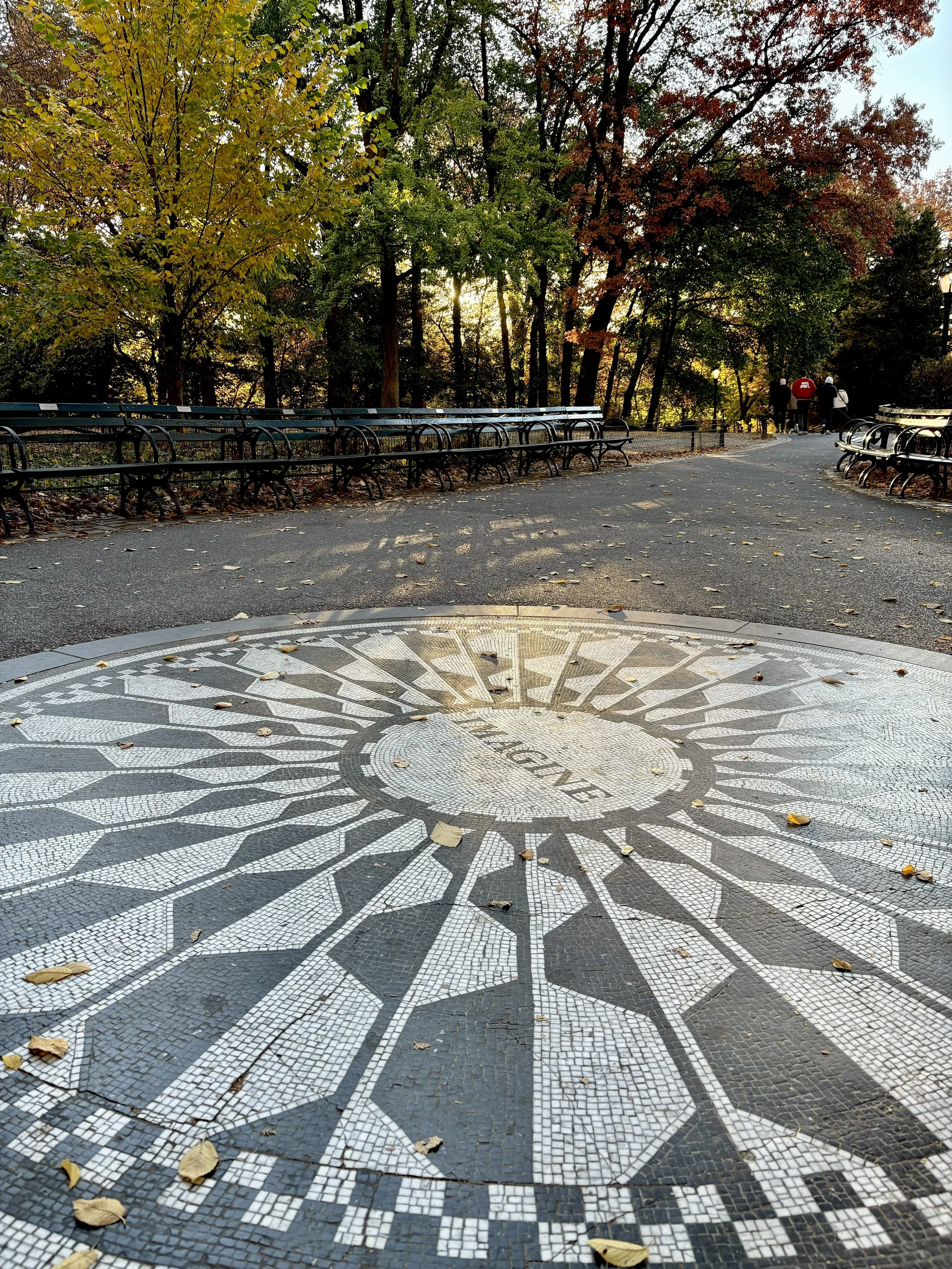
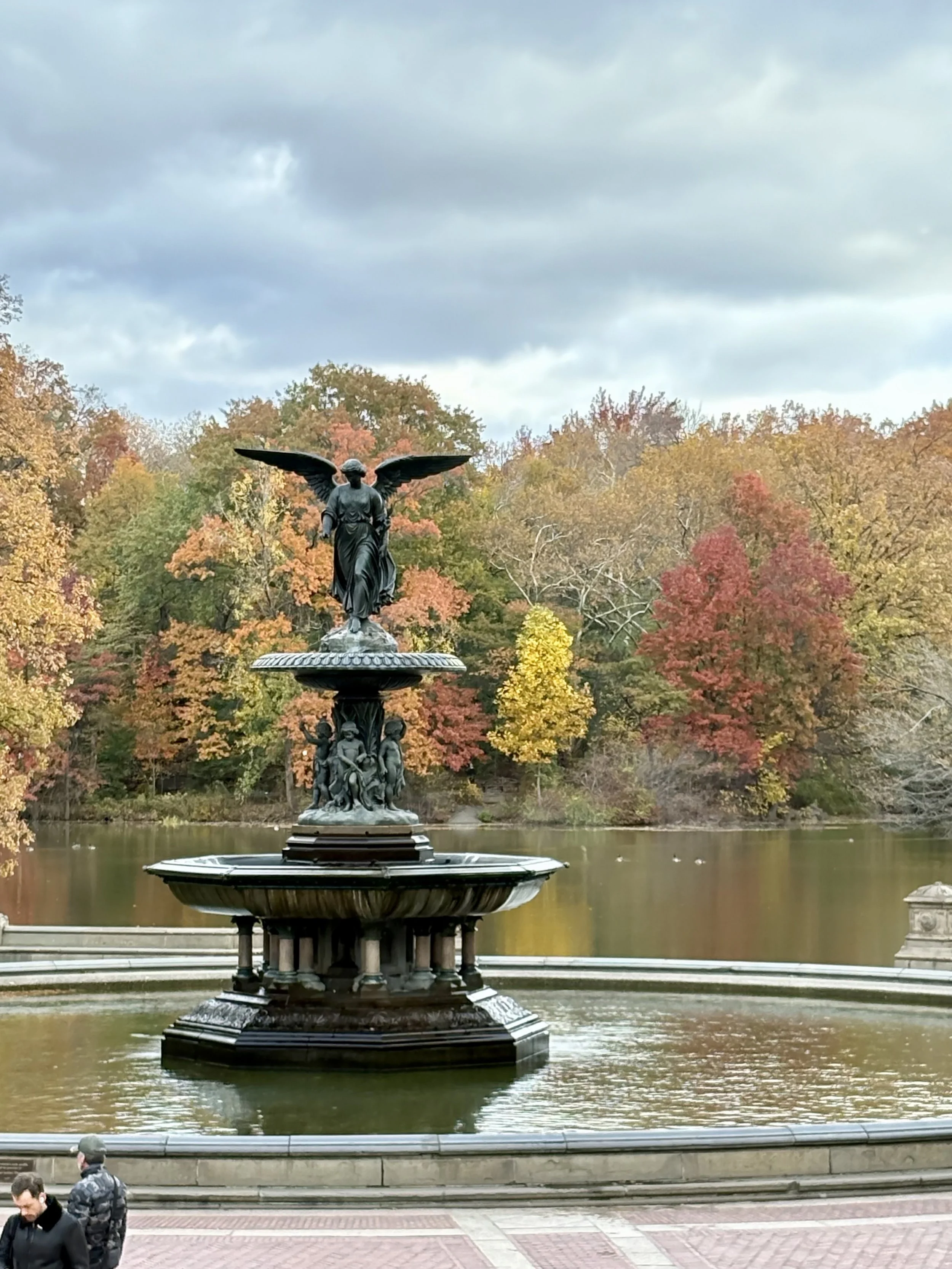
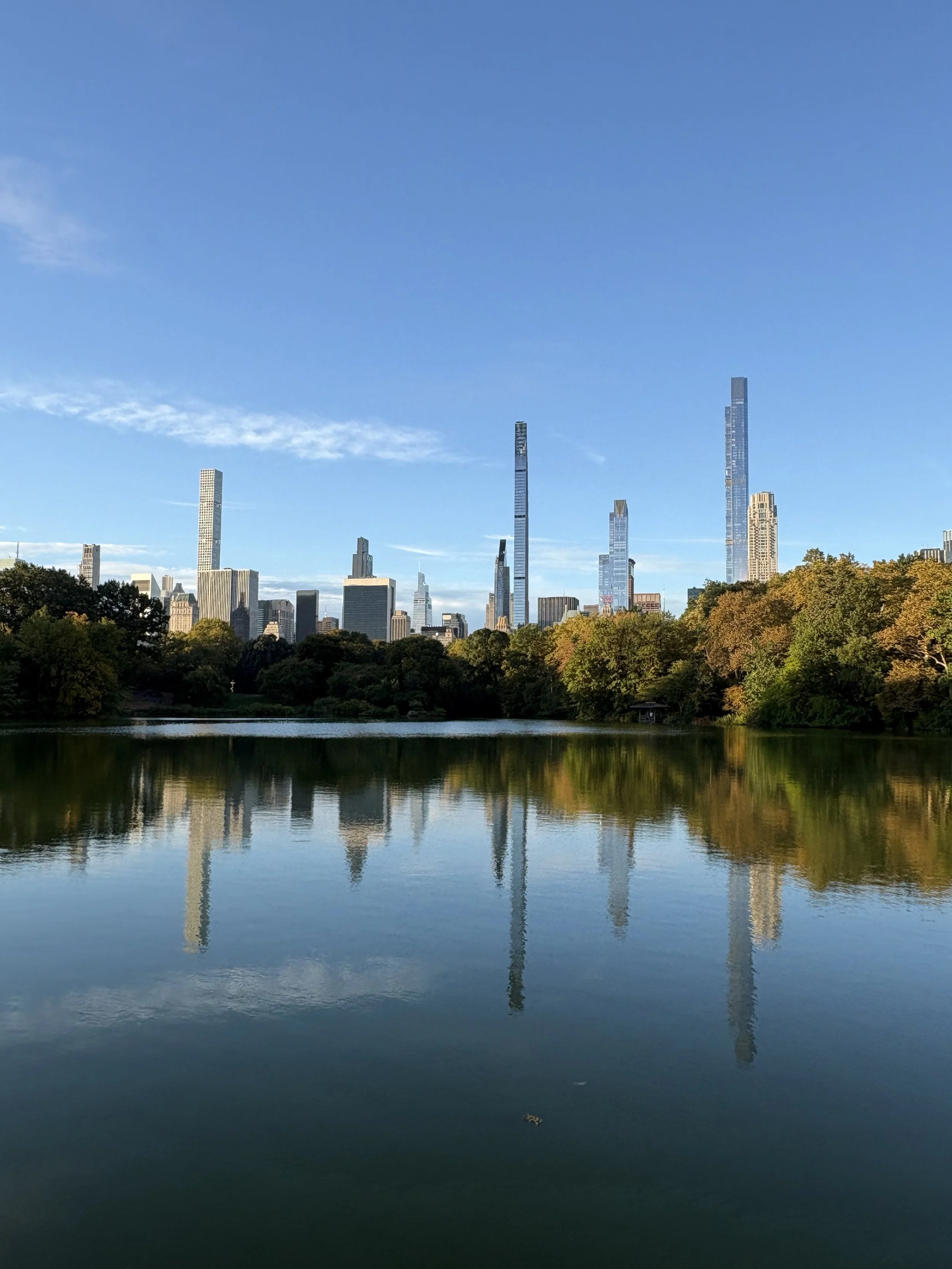
Just like on the Upper East Side, Central Park is a key part of the personality of the Upper West Side. If you’ve chosen to live here, chances are having the park nearby is part of the reason why.
At 843 acres, Central Park provides a much needed oasis in the middle of our concrete jungle and, for many Upper West Siders, almost becomes an extension of home. Maybe you’re a runner or cyclist, have a dog, enjoy weekend picnics with friends, or simply like having somewhere to escape the energy of the city for a while.
If you’re active in almost any way, Central Park quickly becomes your playground. And when you live on the Upper West Side, having all of that just a few blocks away is one of the neighborhood’s greatest luxuries.

Riverside Park
The Upper West Side naturally draws an outdoor crowd. With Central Park to the east and Riverside Park running along the Hudson to the west, you’re never very far from somewhere to get outside.
Riverside Park has miles of running and cycling paths that connect into the larger network around Manhattan, making it one of my favorite ways to explore the city. But it’s not just for runners and cyclists. There are playgrounds, sports fields, gardens, picnic areas and plenty of places to simply sit along the river and watch the world go by.
There are even a few places to grab a bite or a drink, including Ellington in the Park, one of my favorites for those perfect spring lunches when you’d rather not be anywhere but outside.
Buildings That Define the Upper West Side
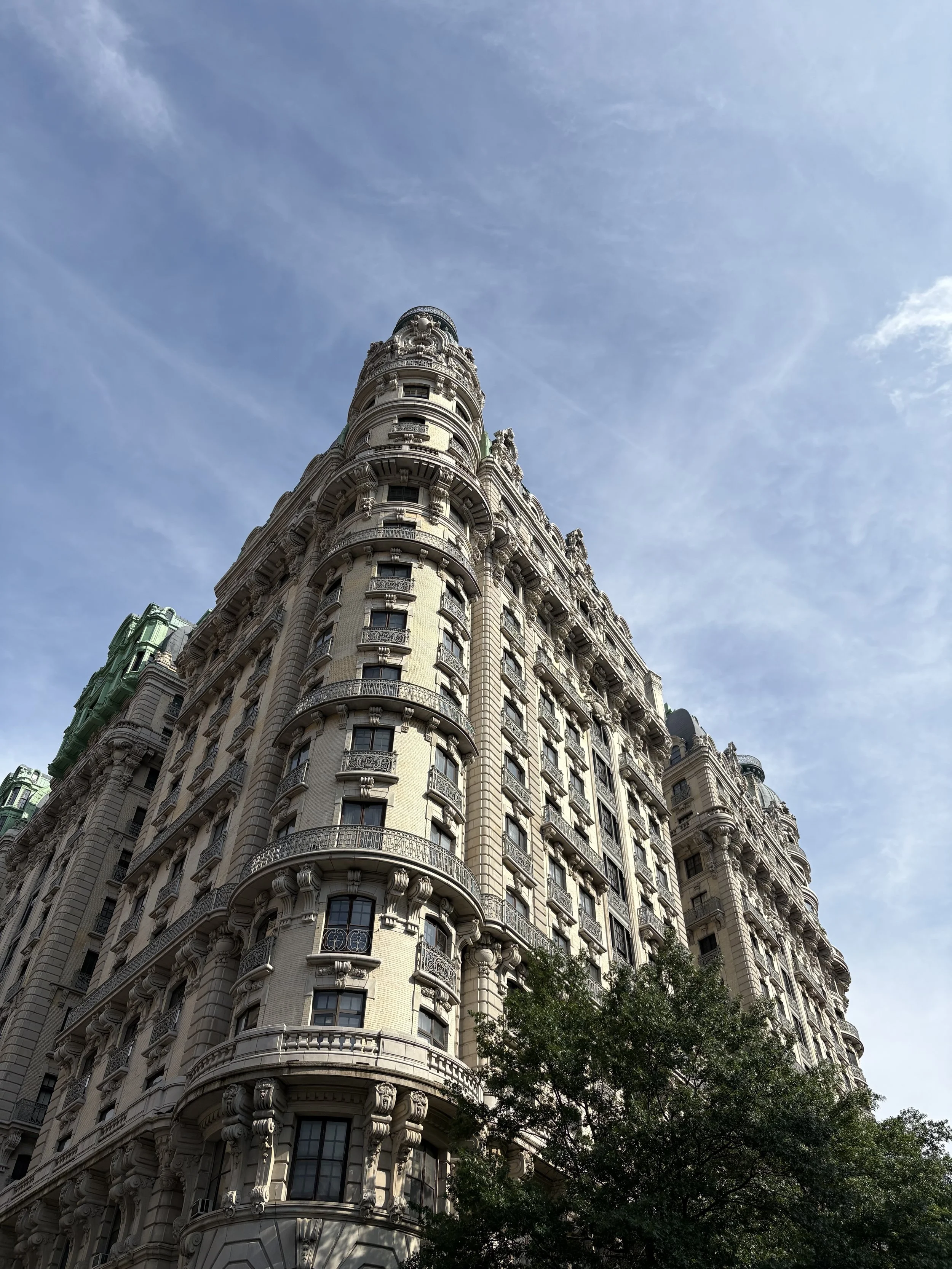
The Ansonia
Broadway and West 74th Street
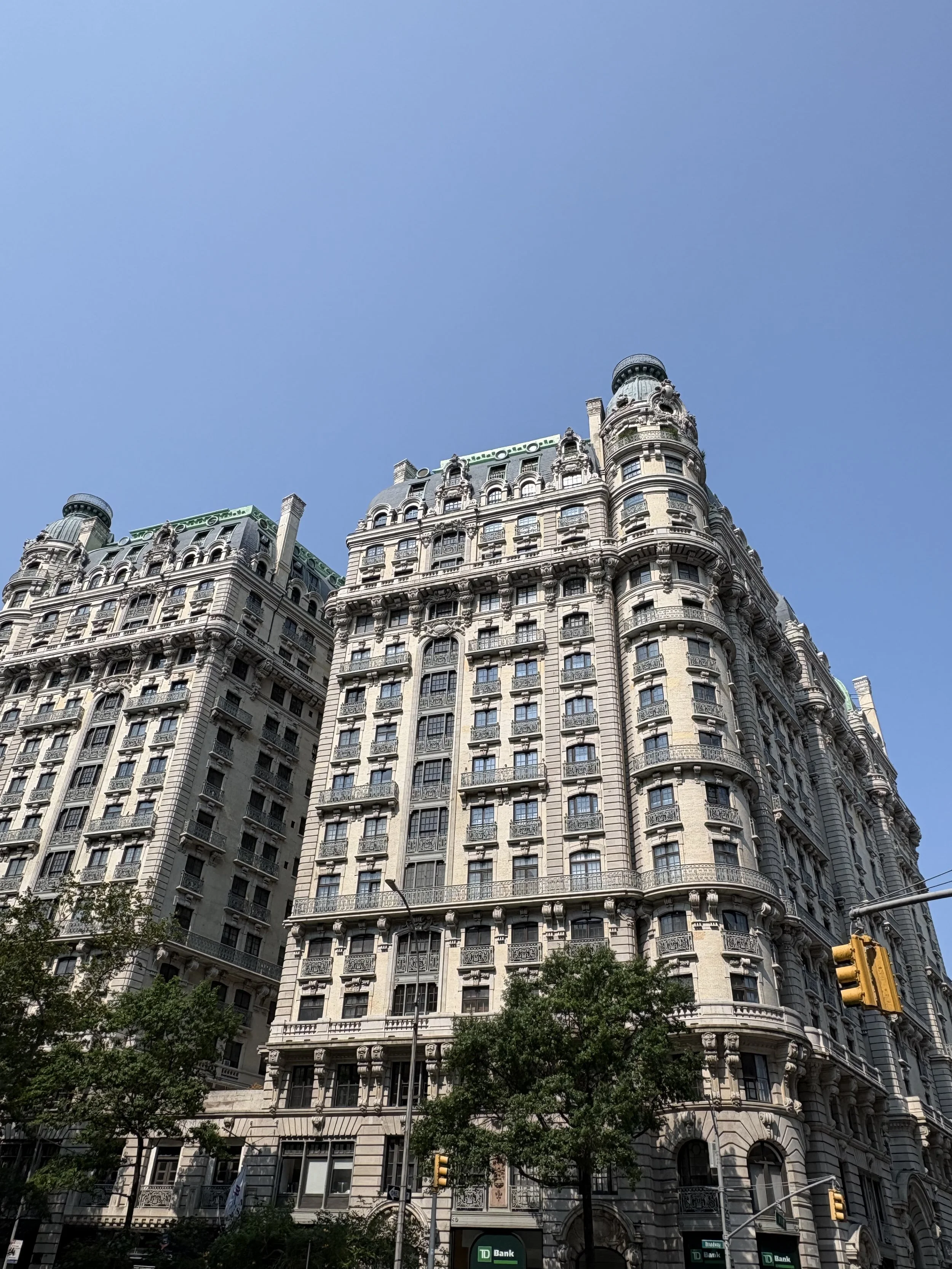
Few buildings on the Upper West Side are as instantly recognizable as the Ansonia. Completed in 1904 and designed by architect Paul E. M. DuBoy, the grand Beaux Arts building was originally conceived as an apartment hotel and once offered everything from ballrooms and restaurants to a rooftop farm. Its elaborate facade, rounded corner towers and mansard roof make it one of Broadway’s great architectural landmarks.
For a detailed history of the Ansonia, follow the link.
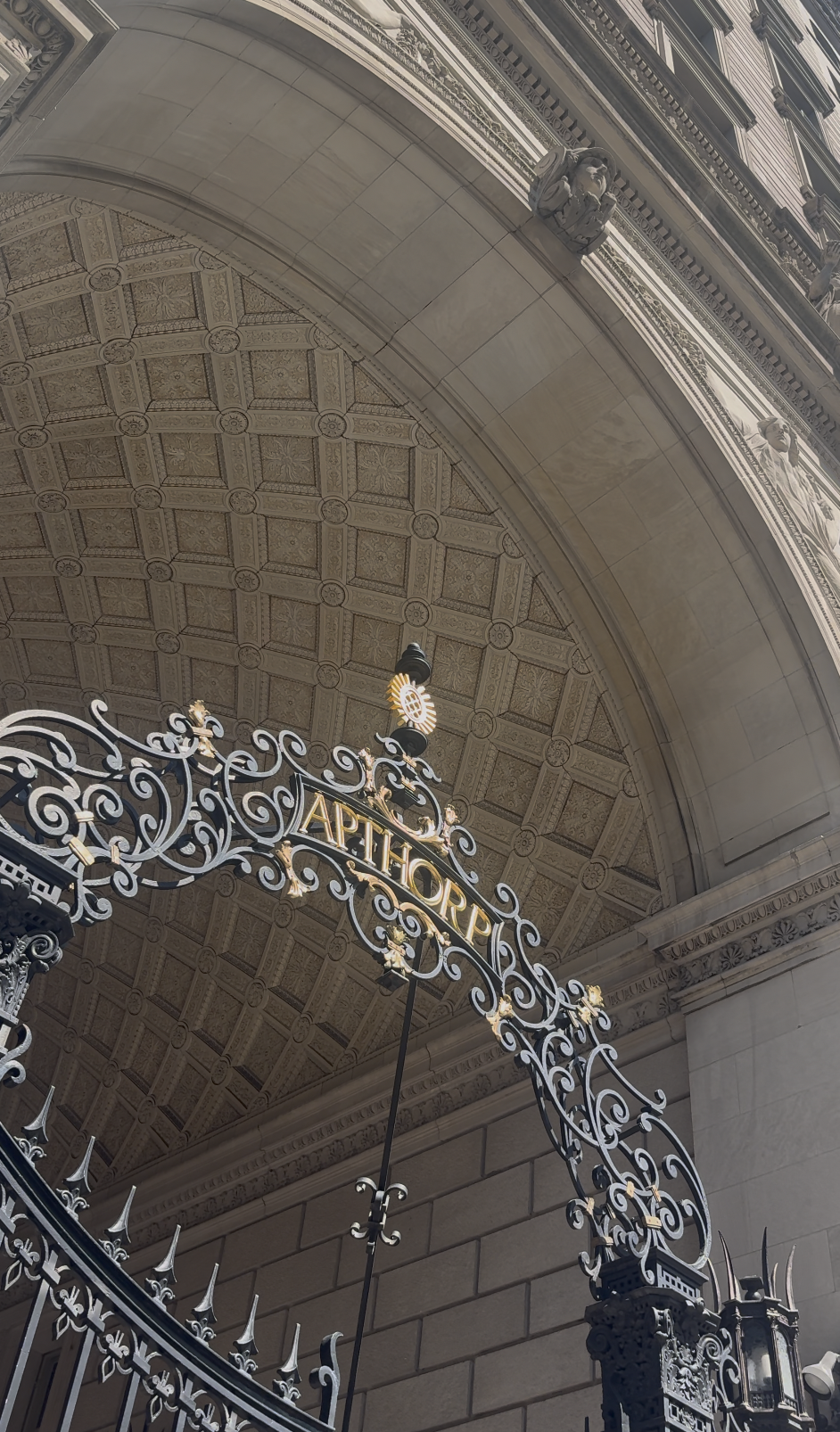
The Apthorp
Broadway and West 78th Street
Taking up an entire city block between Broadway and West End Avenue, the Apthorp is one of the Upper West Side’s grandest residential buildings. Designed by Clinton & Russell and built for William Waldorf Astor in the early 1900s, the building is arranged around an enormous landscaped interior courtyard hidden behind its monumental arched entrances. Walking through those gates feels like briefly leaving New York and entering another world.
For a detailed history of the Apthorp, follow the link.
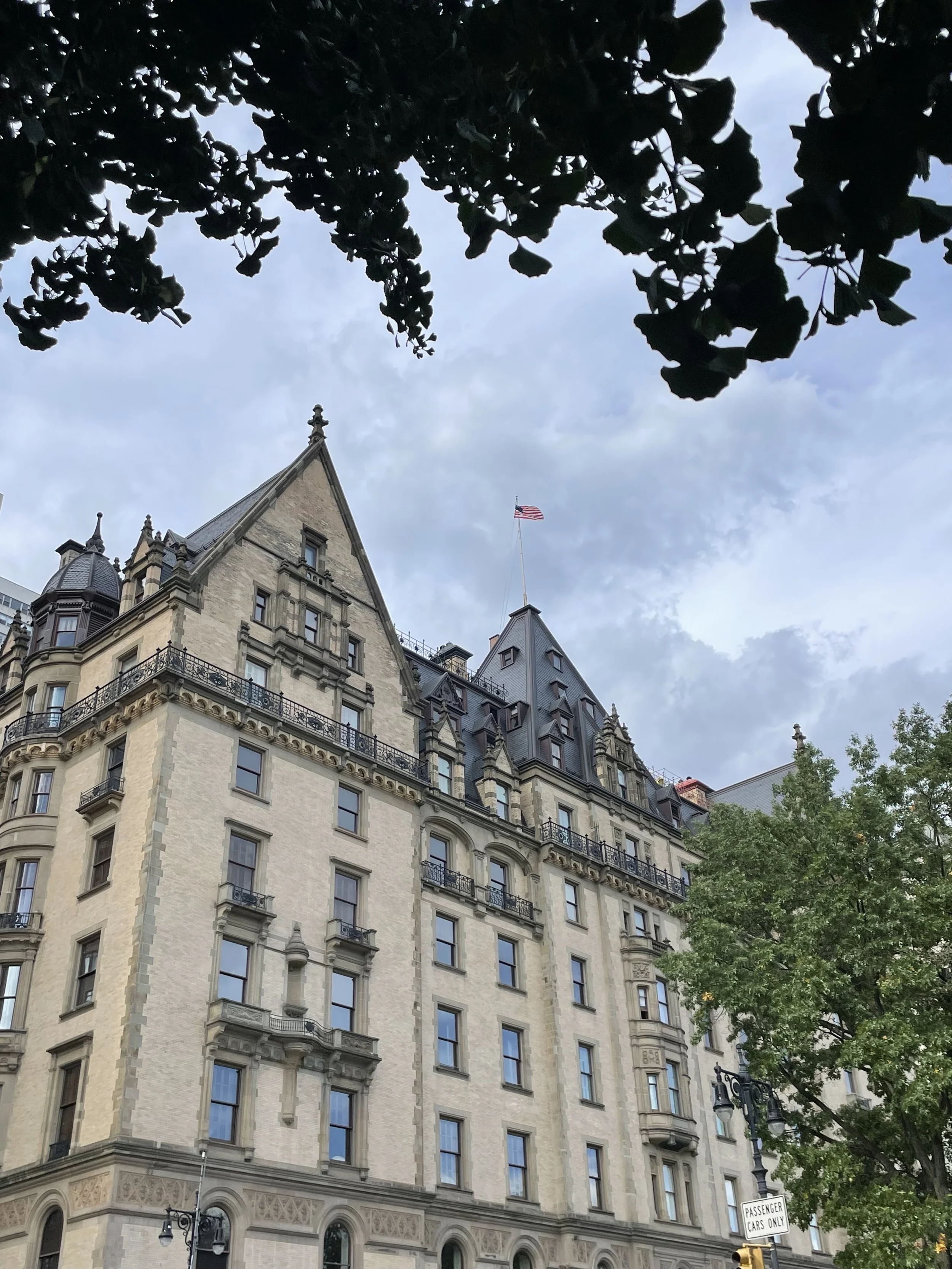
The Dakota
Central Park West and West 72nd Street
The Dakota is arguably the most famous apartment building on the Upper West Side and one of the most recognizable residences in New York. Designed by Henry J. Hardenbergh and completed in 1884, it was built at a time when this stretch of Manhattan was still considered surprisingly remote. Its distinctive silhouette, central courtyard and incredible history have made it a landmark in every sense of the word, with generations of prominent New Yorkers calling it home.
For a detailed history of the Dakota, follow the link.
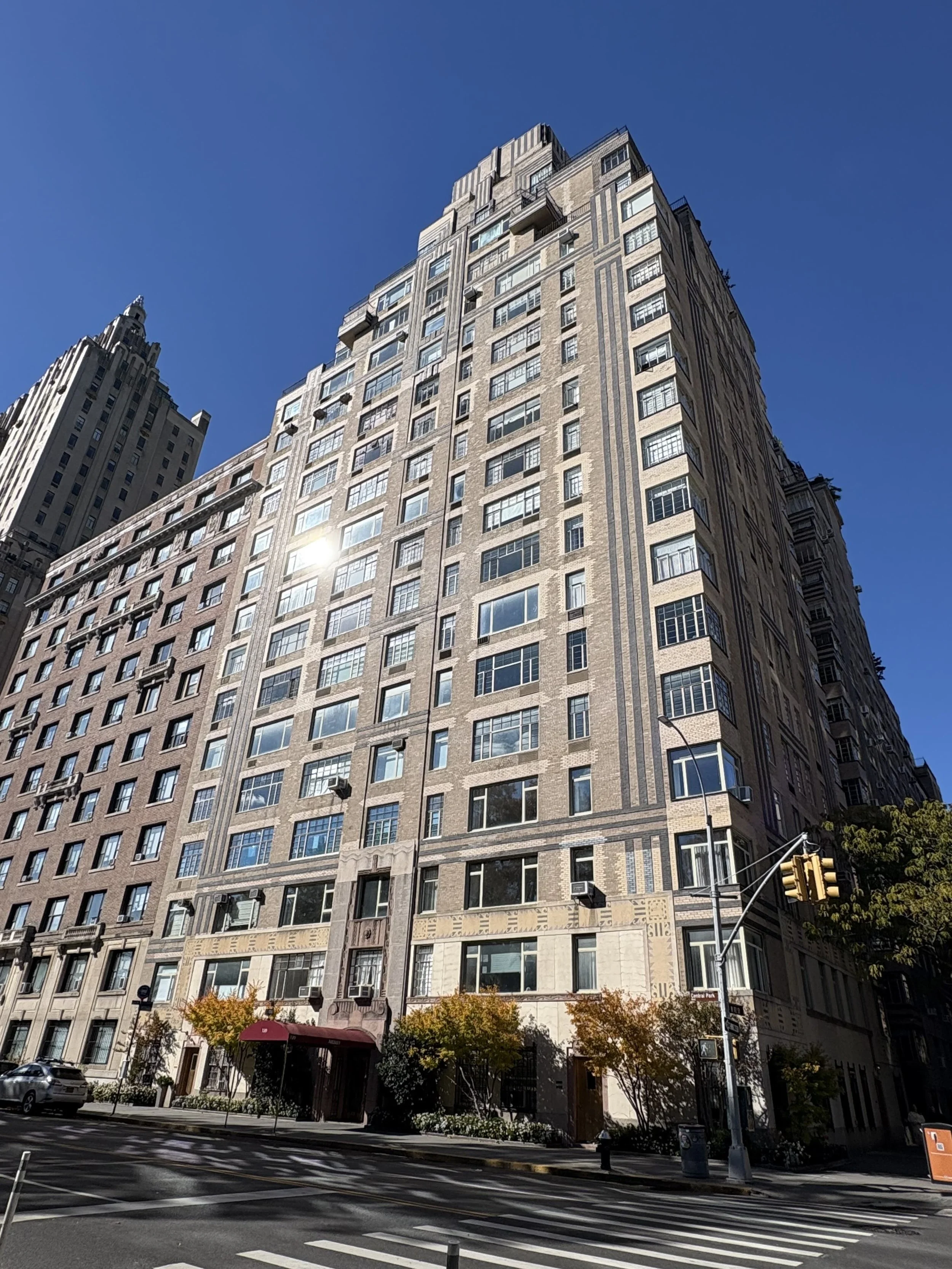
The Ardsley
Central Park West and West 92nd Street
The Ardsley is one of the great Art Deco apartment houses of Central Park West. Completed in 1931 and designed by Emery Roth, its dramatic setbacks, geometric ornament and contrasting brick give it a completely different personality from many of the grand prewar buildings farther south. Look closely and you’ll see Mayan inspired details worked into the design, making it one of the more unusual buildings along the park.
The Beresford
Central Park West and West 81st Street
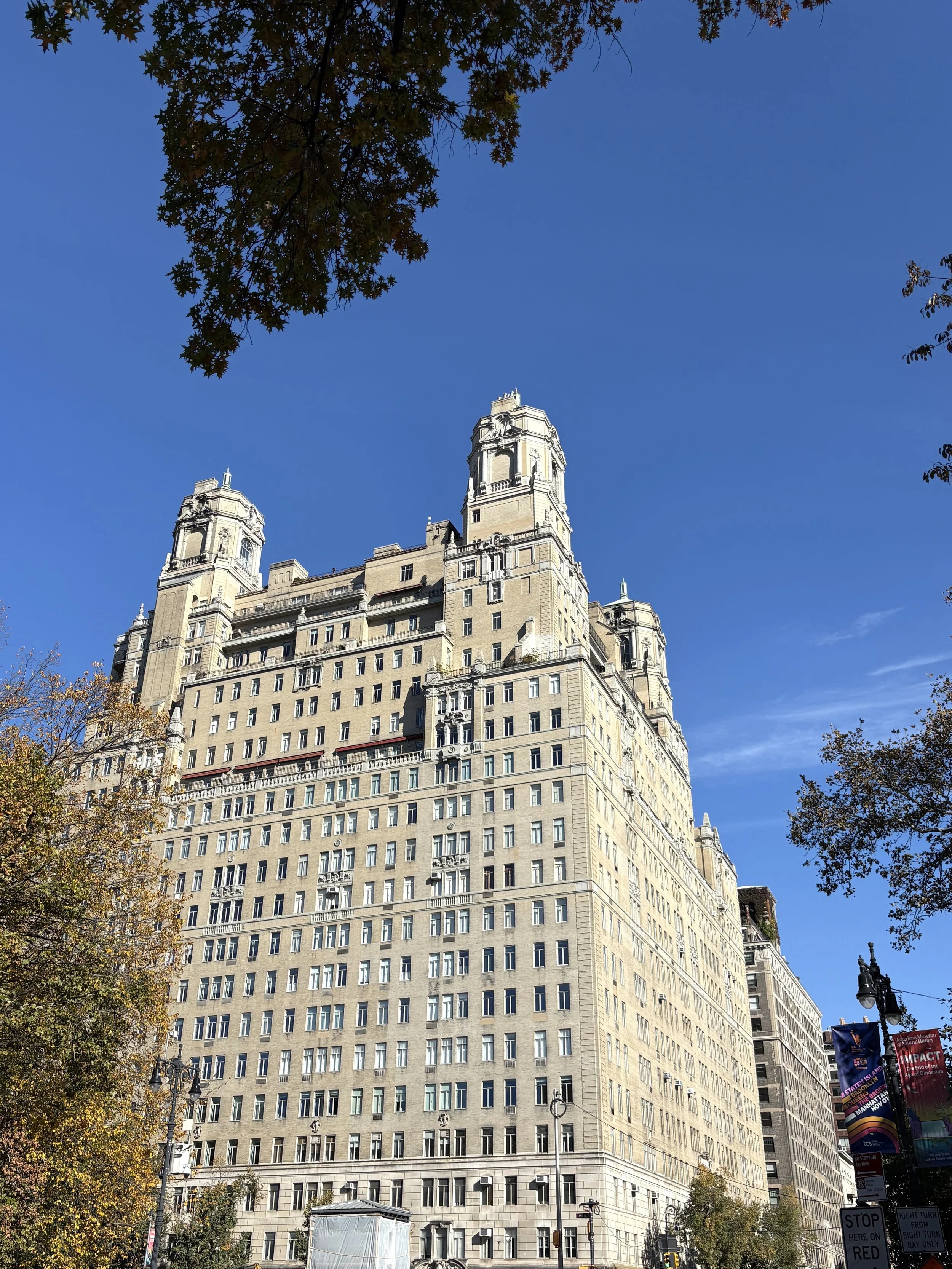
Sitting directly across from the American Museum of Natural History, the Beresford is hard to miss. Designed by Emery Roth and completed in 1929, the enormous building is crowned by three distinctive towers that have become part of the Central Park West skyline. Its scale, elaborate Renaissance inspired details and coveted location overlooking Central Park make it one of the neighborhood’s most celebrated residential buildings.
The San Remo
Central Park West between West 74th and 75th Streets
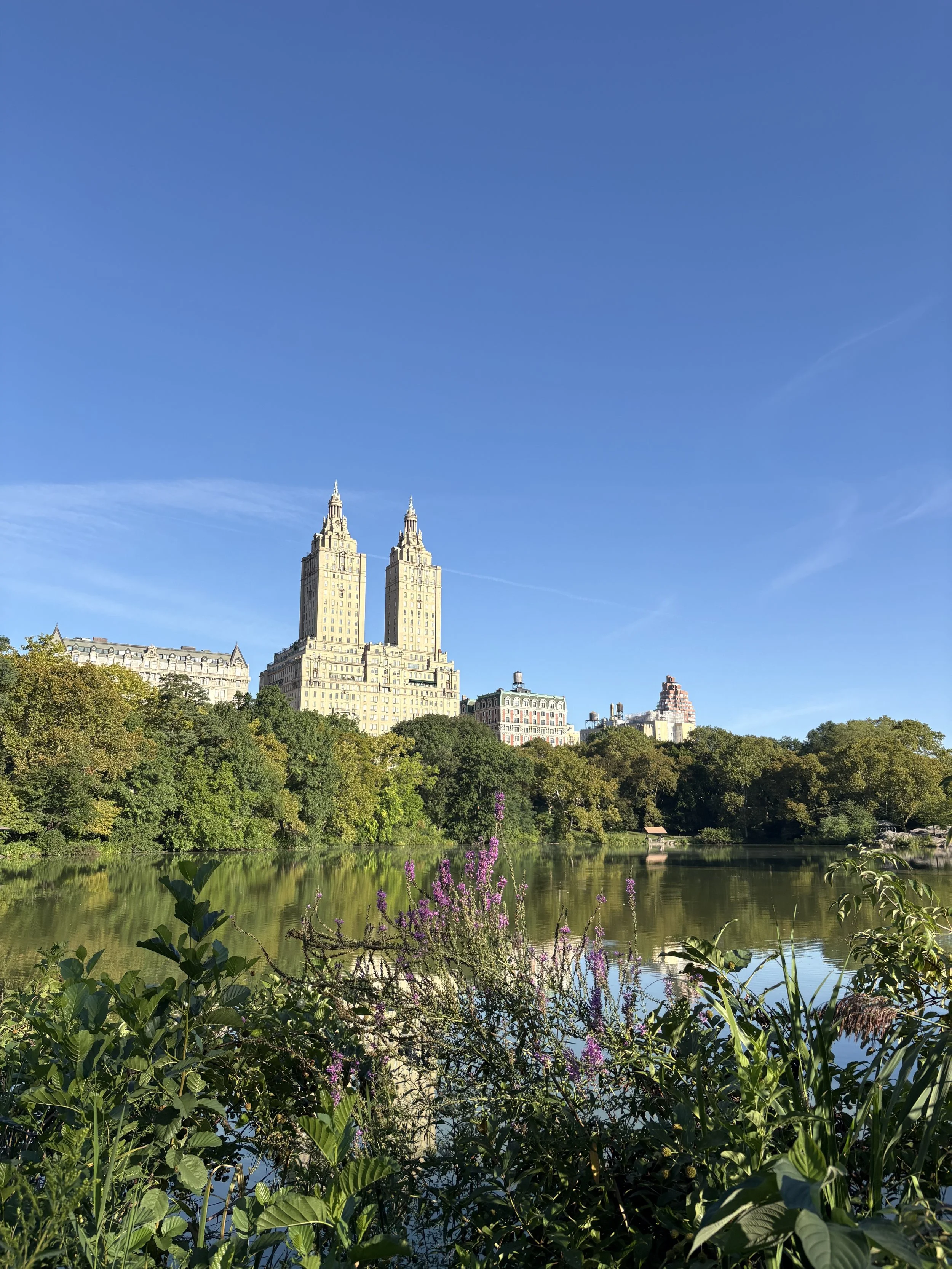
With its twin towers rising above Central Park, the San Remo is one of the defining buildings of the Upper West Side skyline. Designed by Emery Roth and completed in 1930, it was New York’s first twin towered residential skyscraper. The building helped establish the architectural language that would come to define Central Park West and remains one of the avenue’s most prestigious addresses. It’s photographed often as it provides a gorgeous backdrop to Central Park’s Bow Bridge nearby.
The Majestic Apartments
Central Park West between West 71st and 72nd Streets
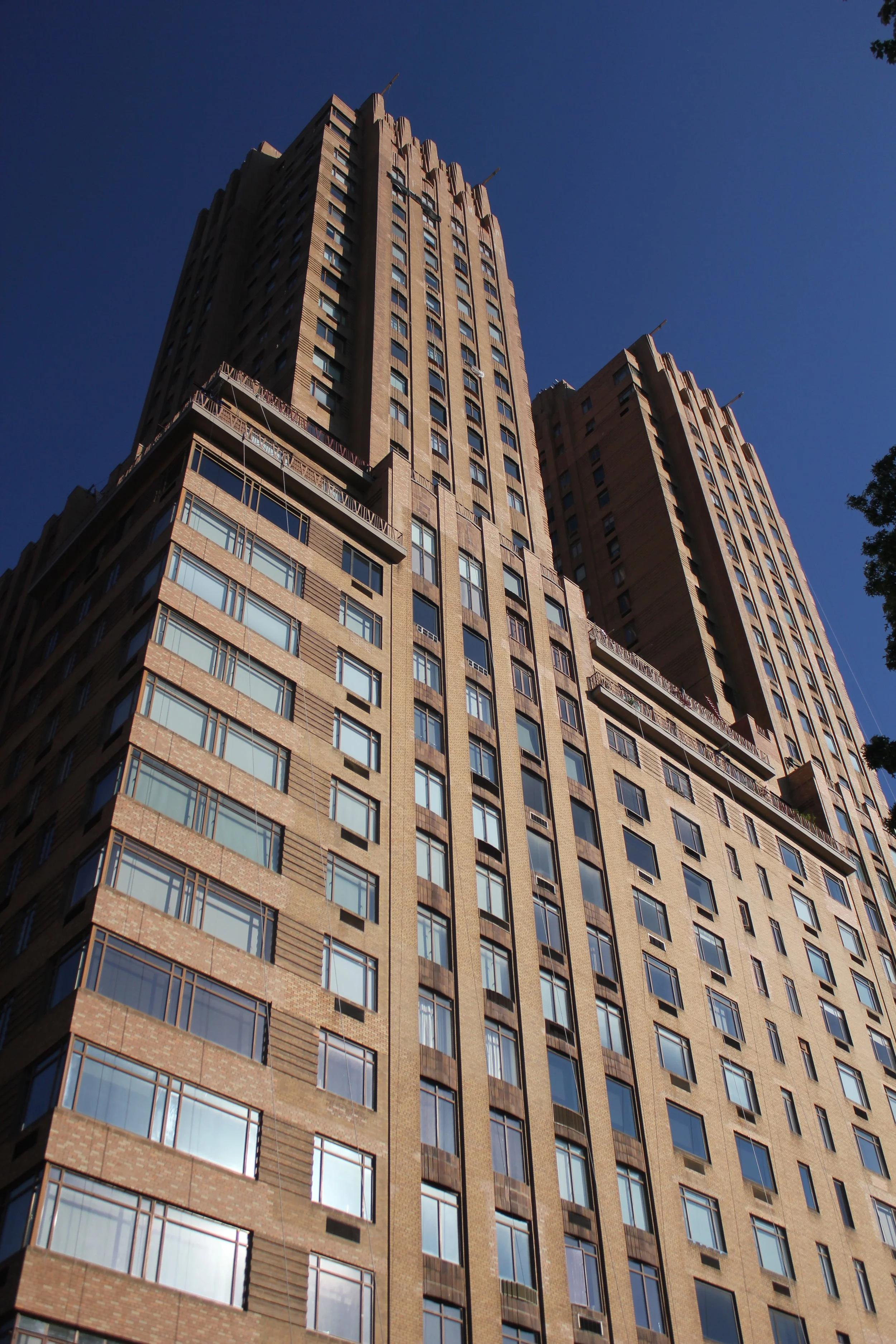
Just across 72nd Street from the Dakota, the Majestic represents a very different era of New York architecture. Designed by architect and developer Irwin S. Chanin and completed in 1931, its streamlined Art Deco facade and soaring twin towers helped transform the Central Park West skyline. Its relatively restrained ornament gives the building a striking modernity that still feels surprisingly contemporary nearly a century later. Did you know there was a mob hit attempted in the lobby in the 1950s?
For a detailed history of the Majestic, follow the link.
About Chris
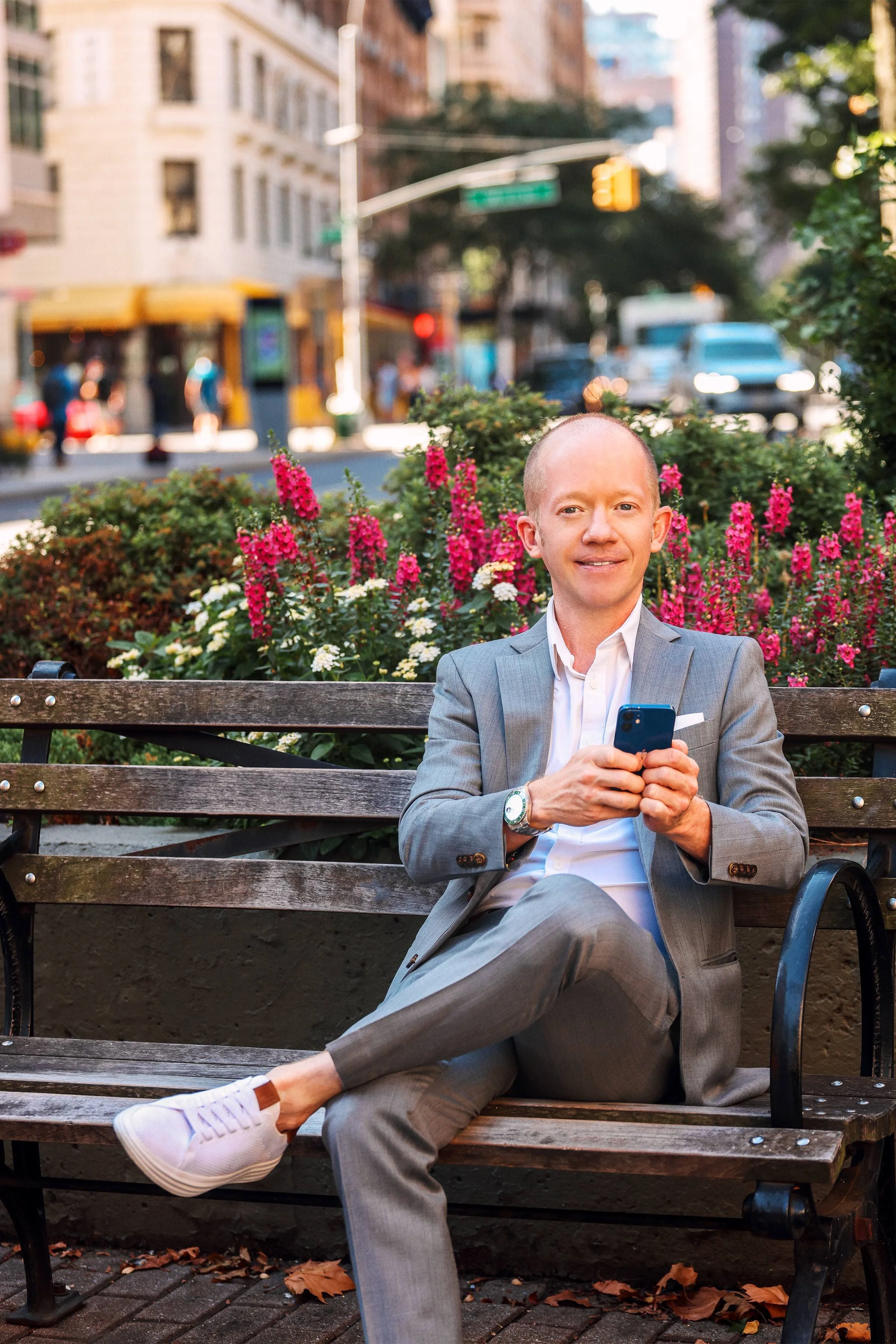
I’m a New York City real estate advisor with Compass, helping people buy and sell homes throughout Manhattan. I’ve lived here for more than 25 years and have made it my passion to learn and immerse myself in everything New York, from its history and food scene to the arts, architecture, running community and all the little things that make this city tick.
My approach to real estate has been shaped by those experiences and by my love of storytelling. I believe every home, building and neighborhood has a story, and understanding that story can make a real difference when it comes to buying or selling a home in New York.
If you’re thinking about buying or selling on the Upper West Side, or simply have a question about the neighborhood or its real estate market, get in touch.