Once the largest private home ever built in New York City, Cornelius Vanderbilt II’s mansion was so vast it redefined what wealth looked like on Fifth Avenue. Let's take a look inside!
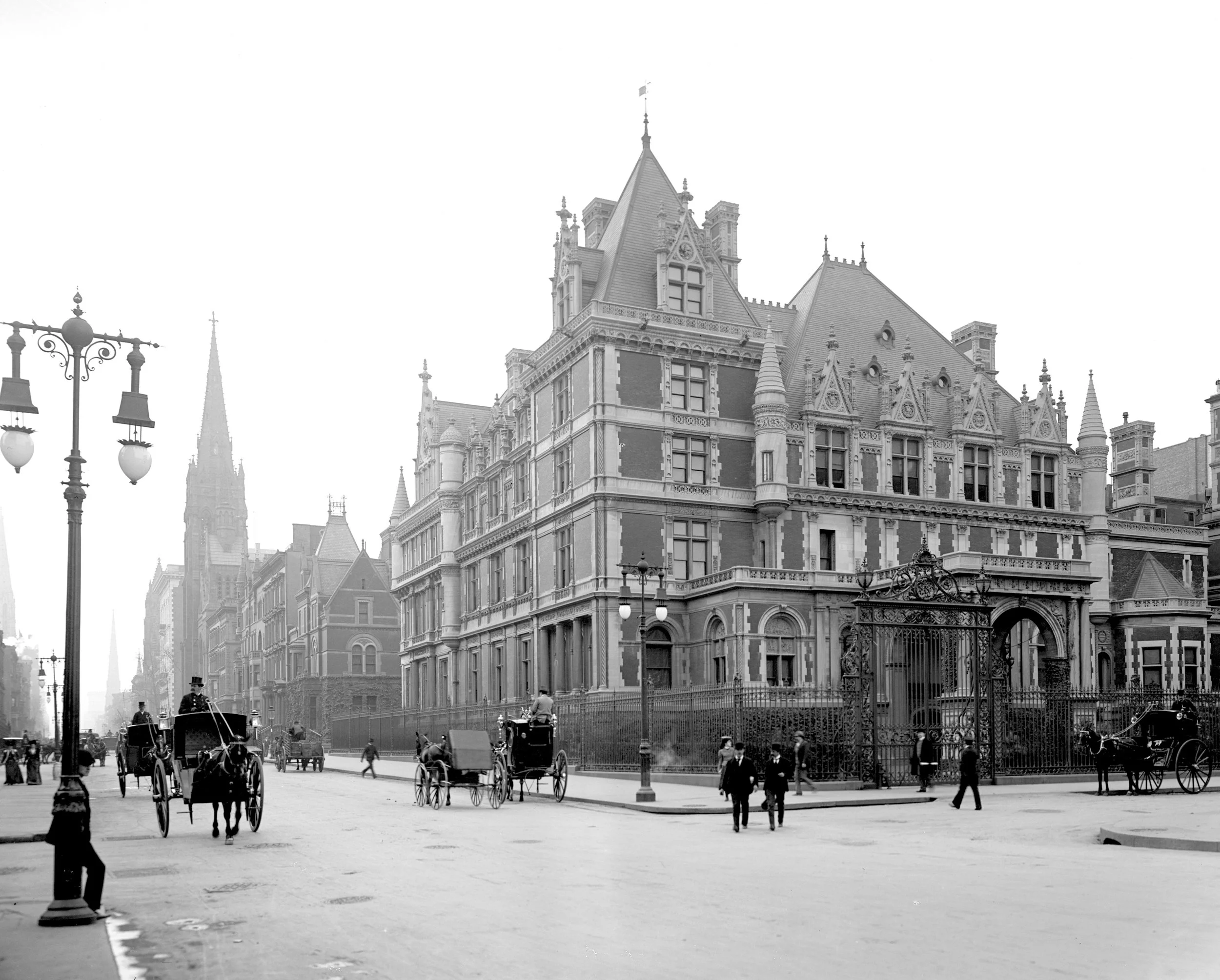
Cornelius Vanderbilt II Mansion on Fifth Avenue and 58th Street, the current site of Bergdorf Goodman. - Photo: NYPL Digital Archives
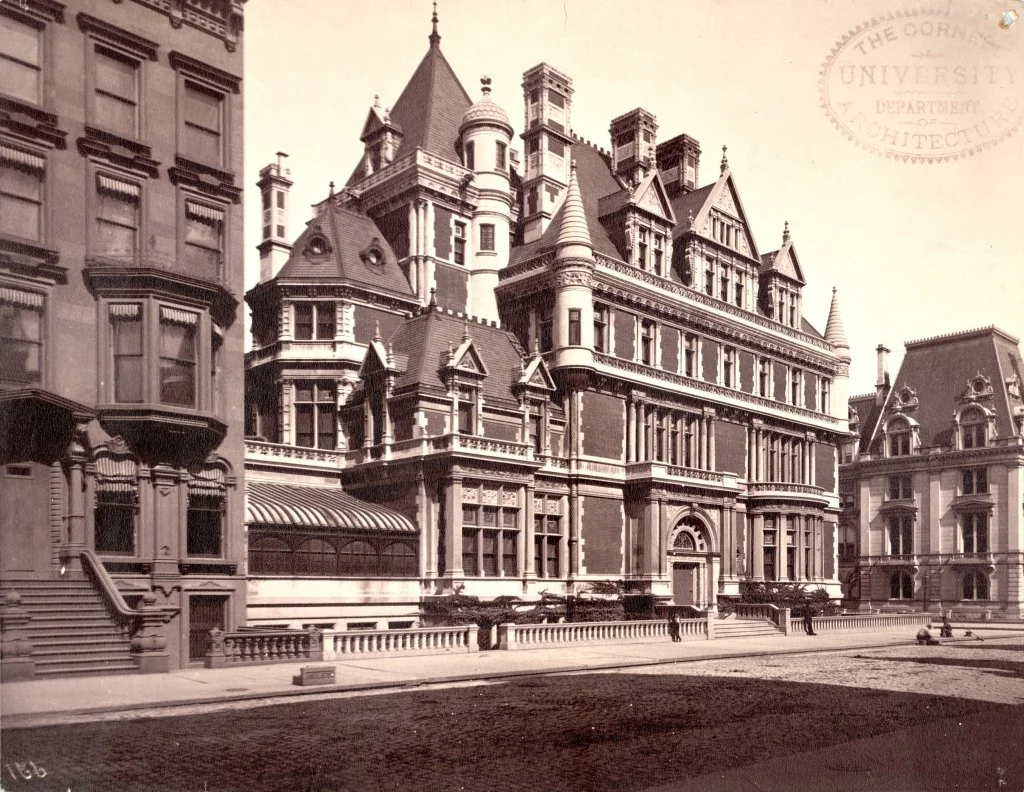
Cornelius Vanderbilt II Mansion on 57th Street before the expansion. - Photo: LOC
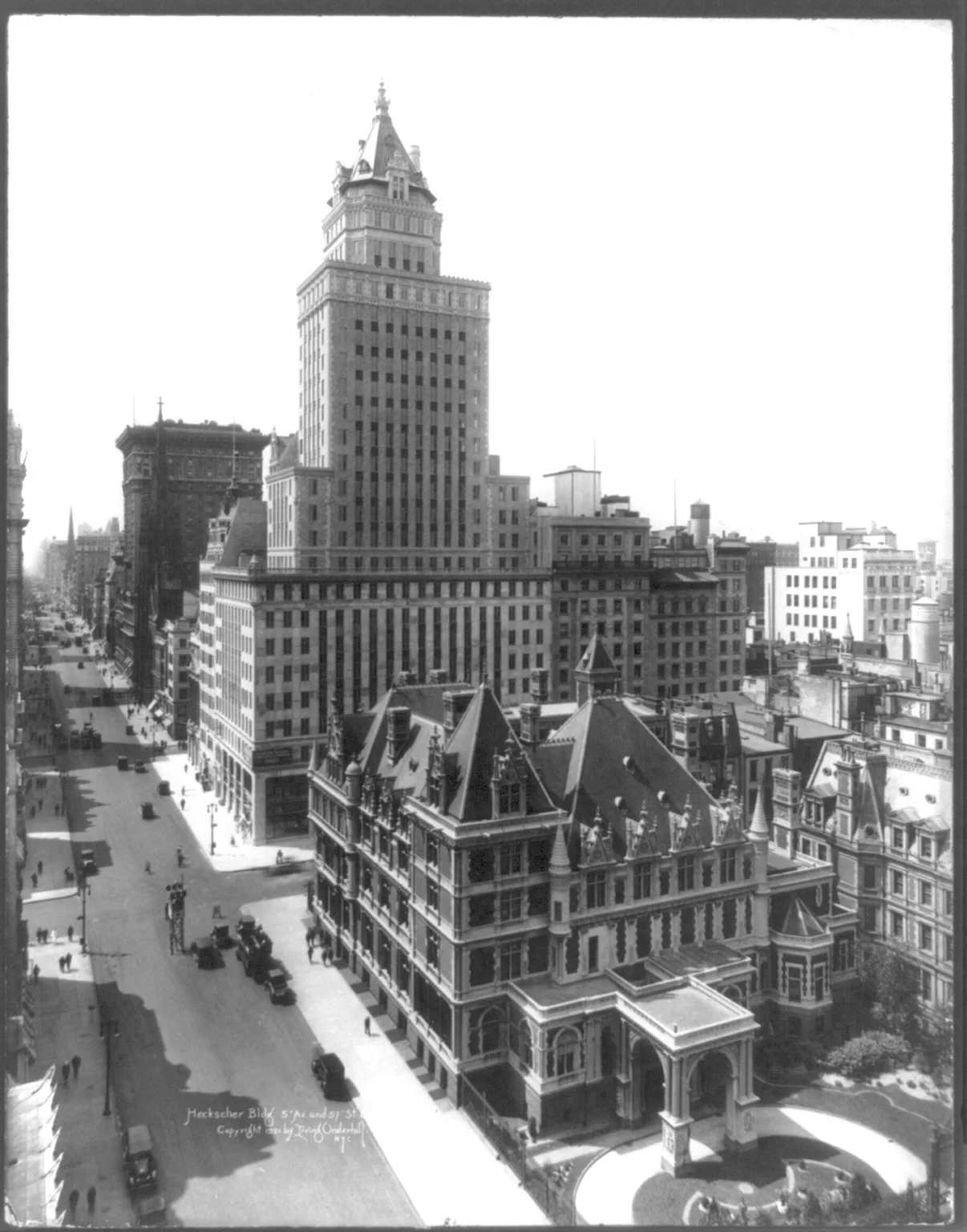
Photo: NYPL Digital Archives
In 1883 Cornelius Vanderbilt II, eldest grandson of the Commodore, constructed a generous Fifth Avenue brownstone on the corner of Fifth Avenue and 57th Street. But as other Gilded Age families built grander residences, thinking they were trying to outdo him, he bought the remaining brownstones on the block and commissioned George B. Post and Richard Morris Hunt to create an even greater, more elaborate home spanning the entire block. The interiors were to be designed by the renowned French firm Jules Allard & Sons, with furnishings and decorative pieces imported from Europe.
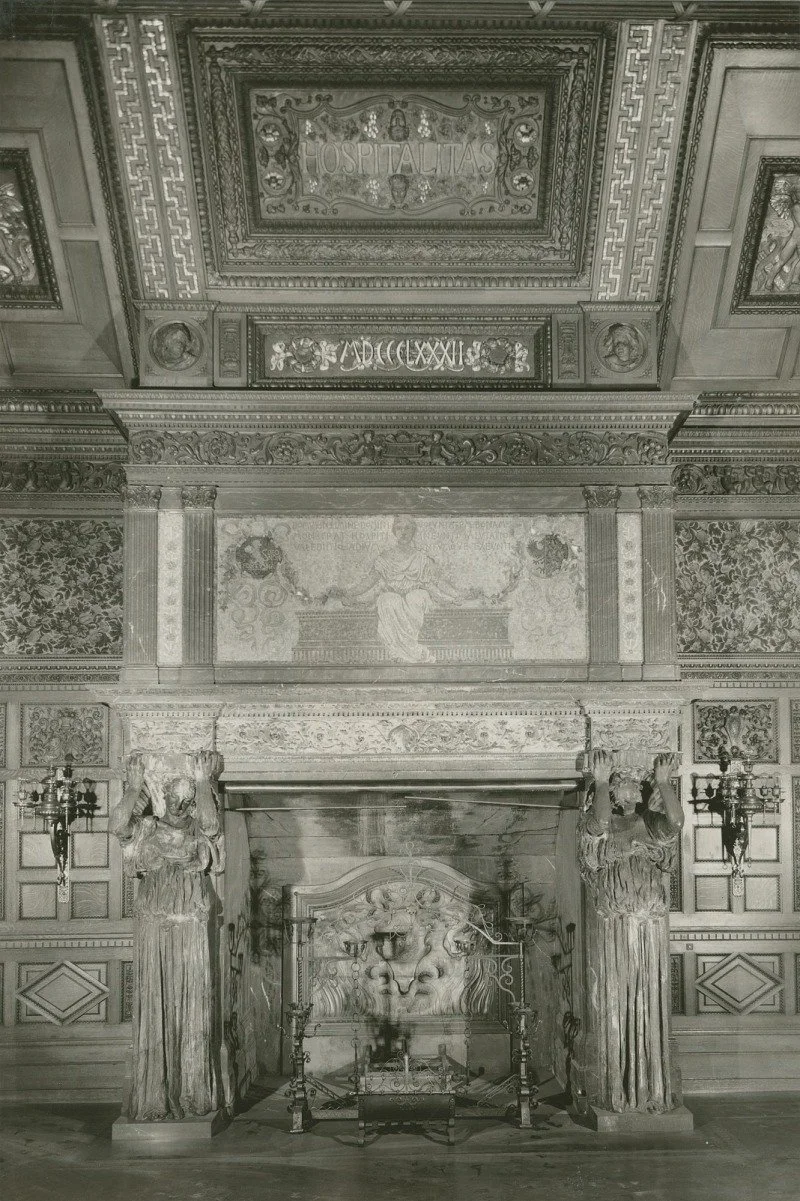
The Augustus Saint-Gaudens fireplace which is now on display at The Met. - Photo: LOC
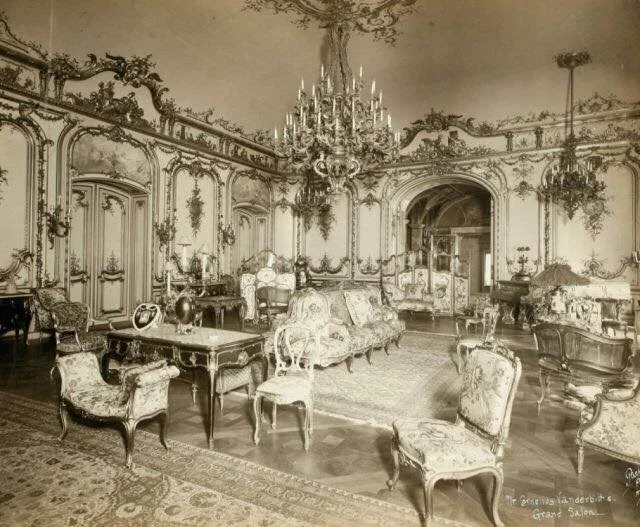
The Grand Salon. - Photo: LOC
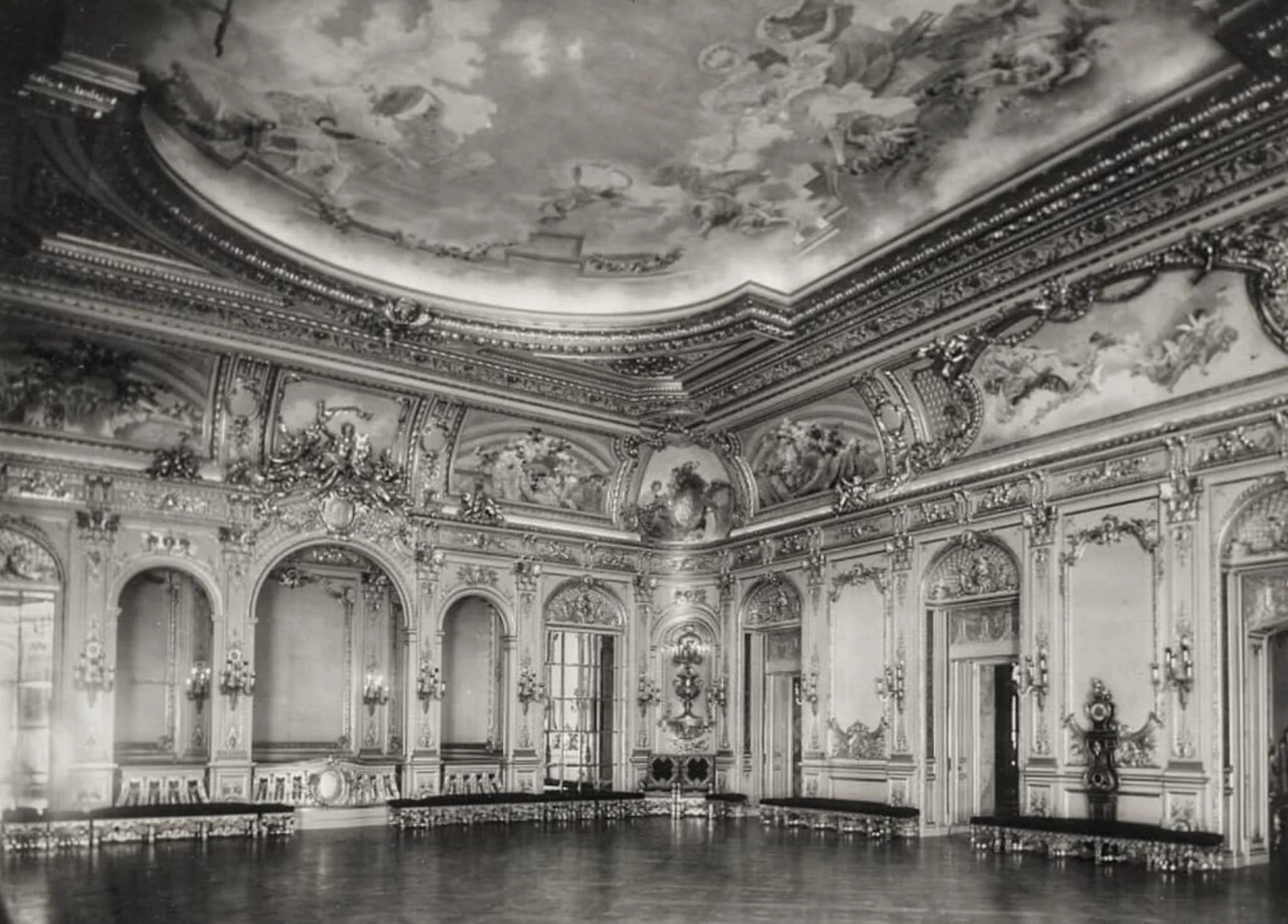
The Grand Ballroom, capacity 650. - Photo: LOC
The final house was a Châteauesque marvel: six stories tall (not including the basement), complete with a private garden and stable. Inside, the first floor opened into a soaring Caen stone entrance hall leading to a library, small salon, grand salon, watercolor room, and a two-story dining room that doubled as an art gallery. These rooms were centered around the large great hall and ballroom which could entertain 650 people. There was also a Moorish smoking room, an office, a den, a breakfast room, and service spaces.
The second floor held the family’s private rooms. Mrs. Vanderbilt’s suite with bedroom, boudoir, and dressing rooms, and Mr. Vanderbilt’s bedroom, bath, study, and closets.
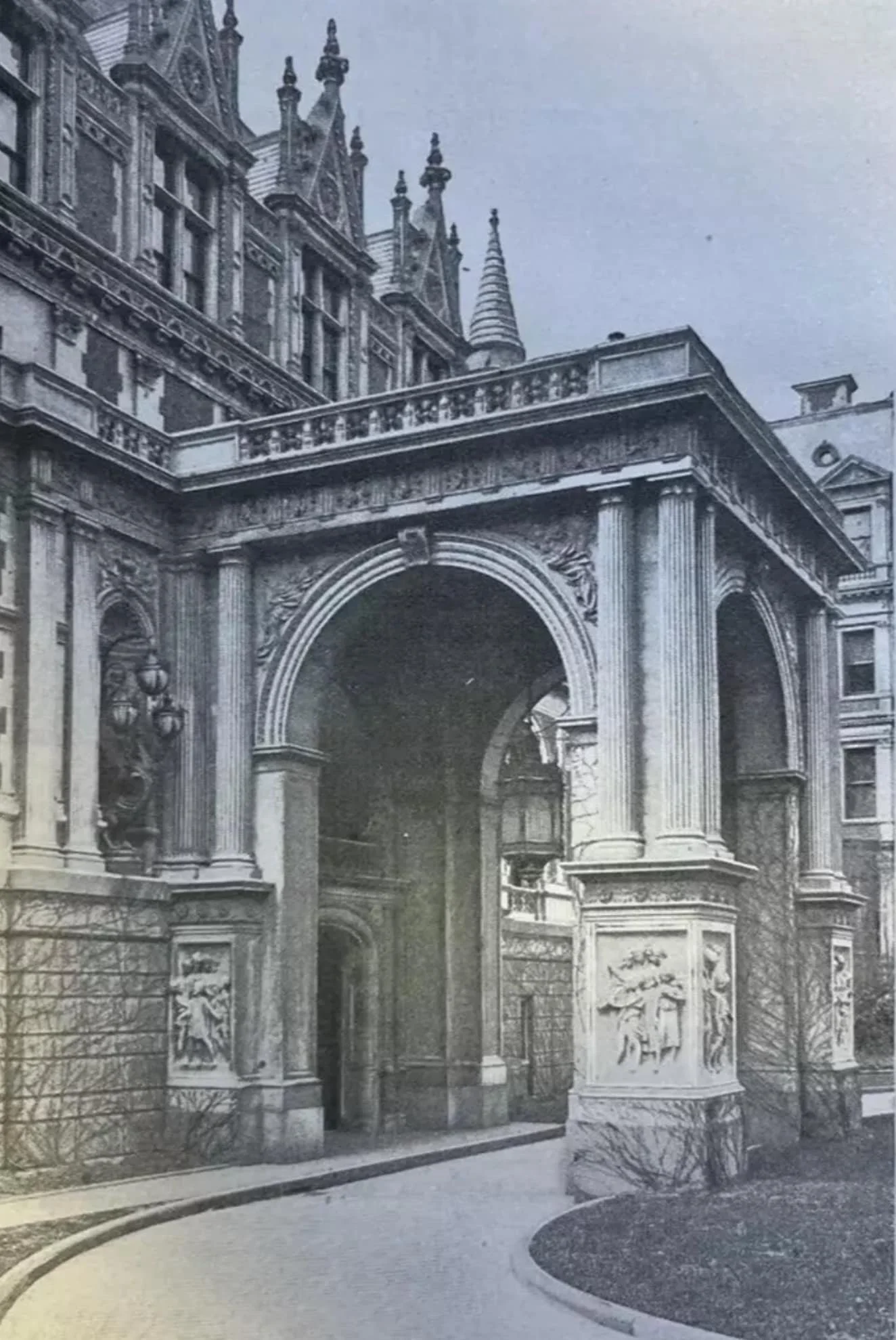
Vanderbilt's guest entrance. - Photo: NYPL Digital Archives
The family came and went through the 1 West 57th Street entrance while guests arrived on the fancier 58th Street side, passing through towering iron carriage gates and circling the grand porte cochère. This was the route reserved for New York’s elite, where carriage after carriage rolled in for the city’s most exclusive social gatherings. Valentine’s Manual of Old New York said: "Visitors lucky enough to be on this spot during a social function will never forget the procession of smart equipages, drawn by blooded horses, and manned by liveried footmen and grooms, discharging passengers, each of them a society member of high standing."
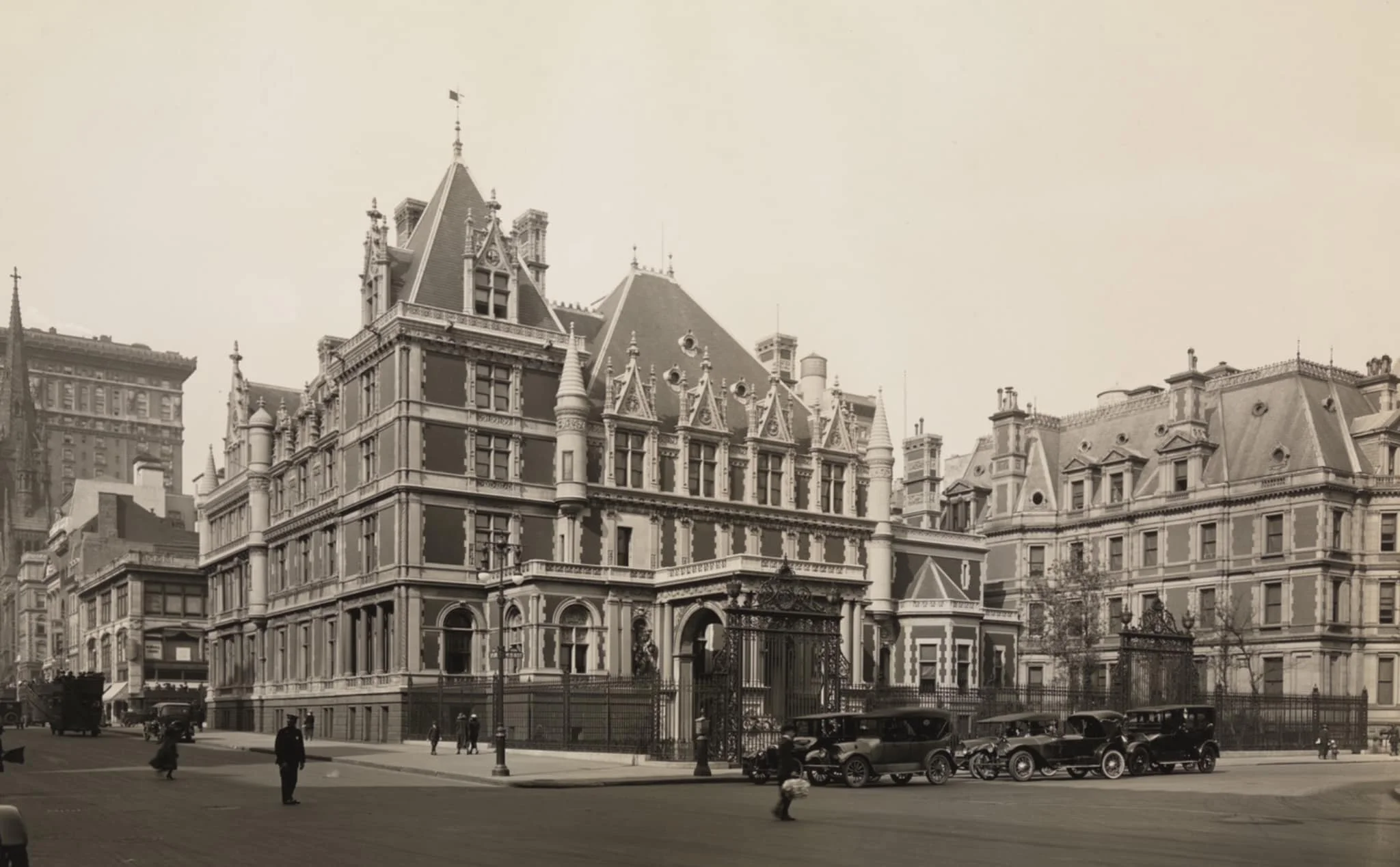
Photo: NYPL Digital Archives
Cornelius enjoyed his expanded mansion for only thirteen years before suffering a stroke that left him wheelchair-bound until his death. His widow, Alice Claypoole Vanderbilt, inherited use of the Fifth Avenue house and The Breakers in Newport. The trust fund that Cornelius had left his wife produced a yearly income of $250,000, which was just enough to maintain both houses. By the 1920s Midtown was changing and the mansions were being swallowed up by commercial development. Maintaining such a place became increasingly impractical.
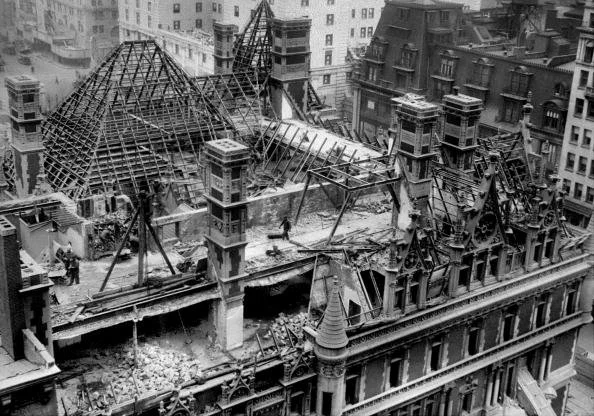
Demolition. Photo: NYPL Digital Archives
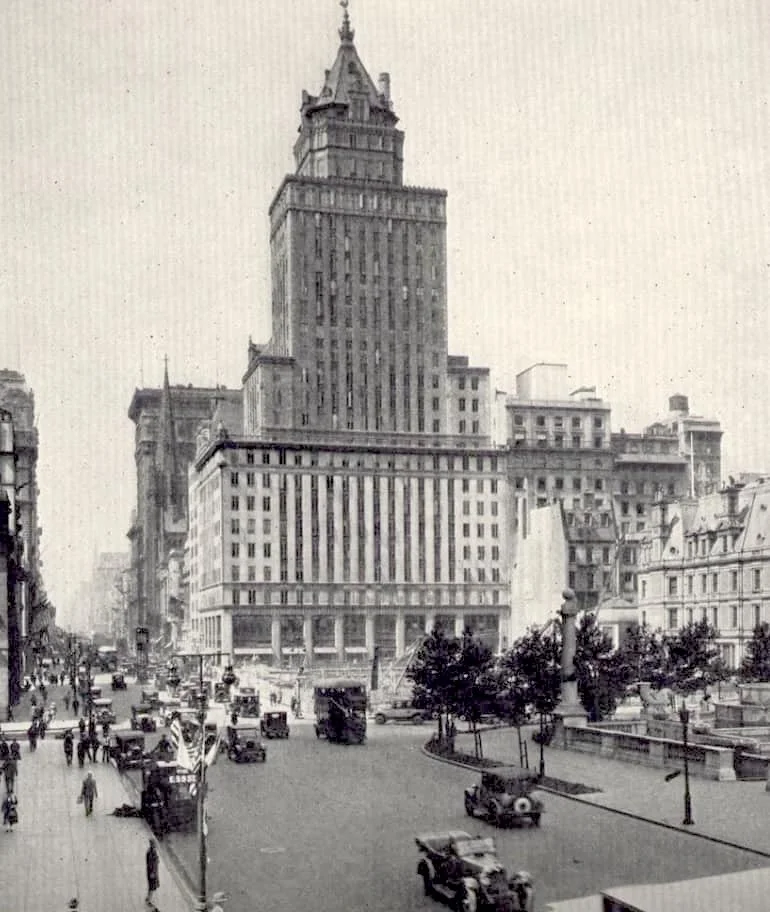
Demolition. Photo: NYPL Digital Archives
Alice tried to hang on, but in 1926 she sold the site for roughly $7 million to developers and the mansion was demolished soon after.
Before the wrecking ball fell Alice Vanderbilt removed and donated many interior fittings: the Augustus Saint-Gaudens fireplace which is now on display at The Met, the ornate Moorish ceiling from the smoking room, and the monumental metal entry gates now the entrance to Central Park’s Conservatory Gardens.
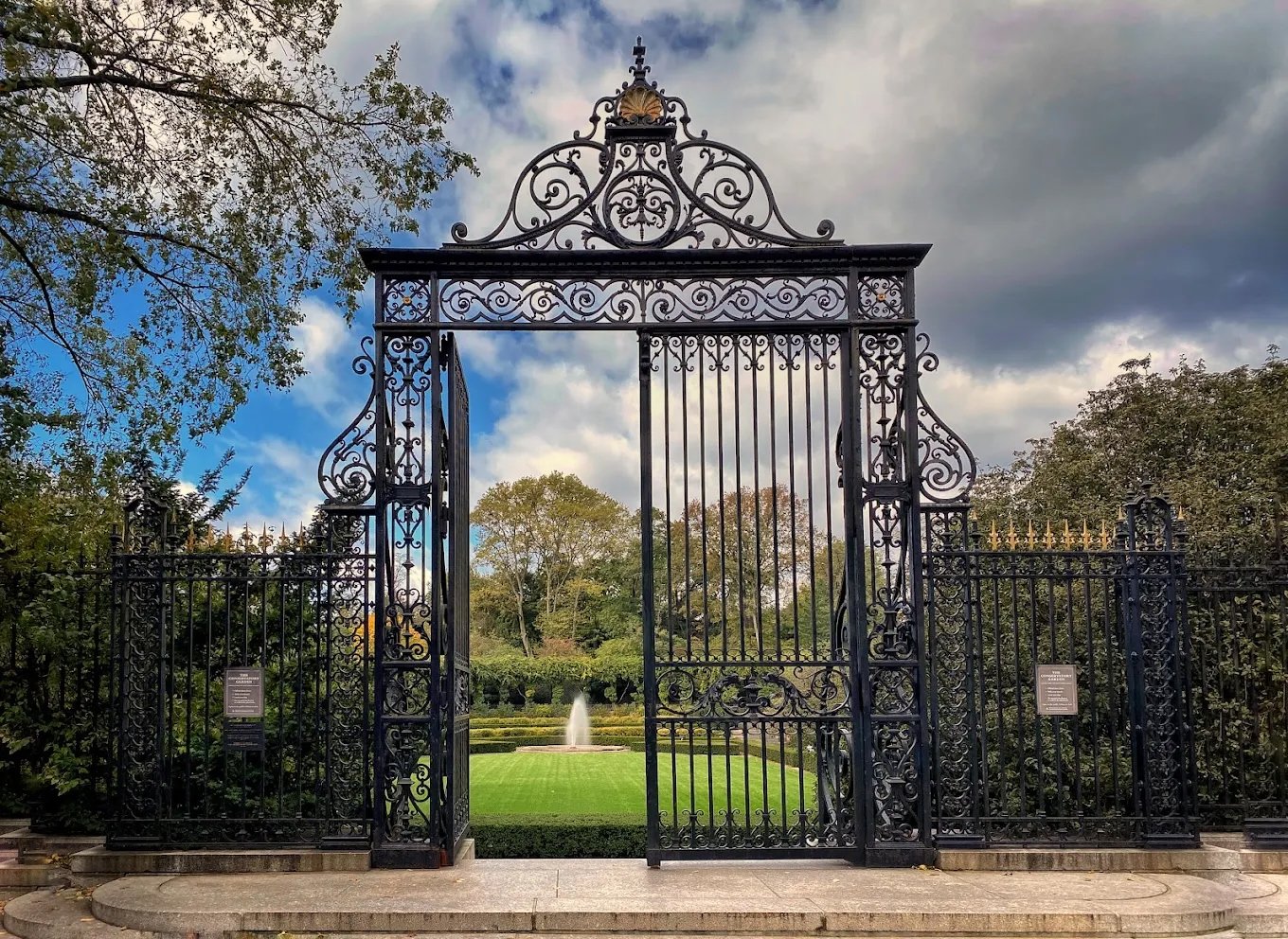
The Vanderbilt Gate, now the entrance to Central Park's Conservatory Gardens.. - Photo: WikiCommons
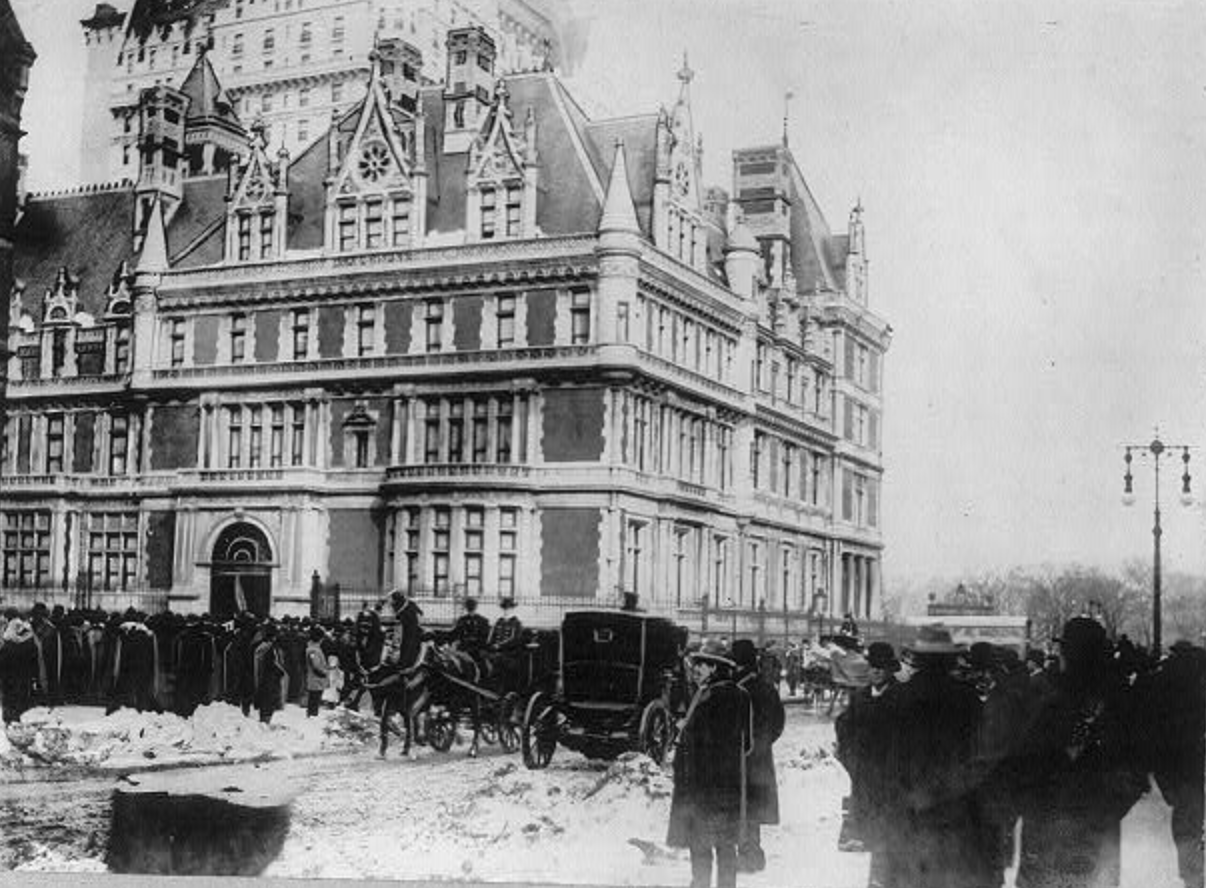
New Yorker's lining up to view the inside of Mrs. Vanderbilt's home before demolition. - Photo: LOC
A week before the wrecking ball was scheduled to demolish the 43-year-old home, Mrs. Vanderbilt arranged to have it opened to the public for fifty cents admission, which would be donated to charity.
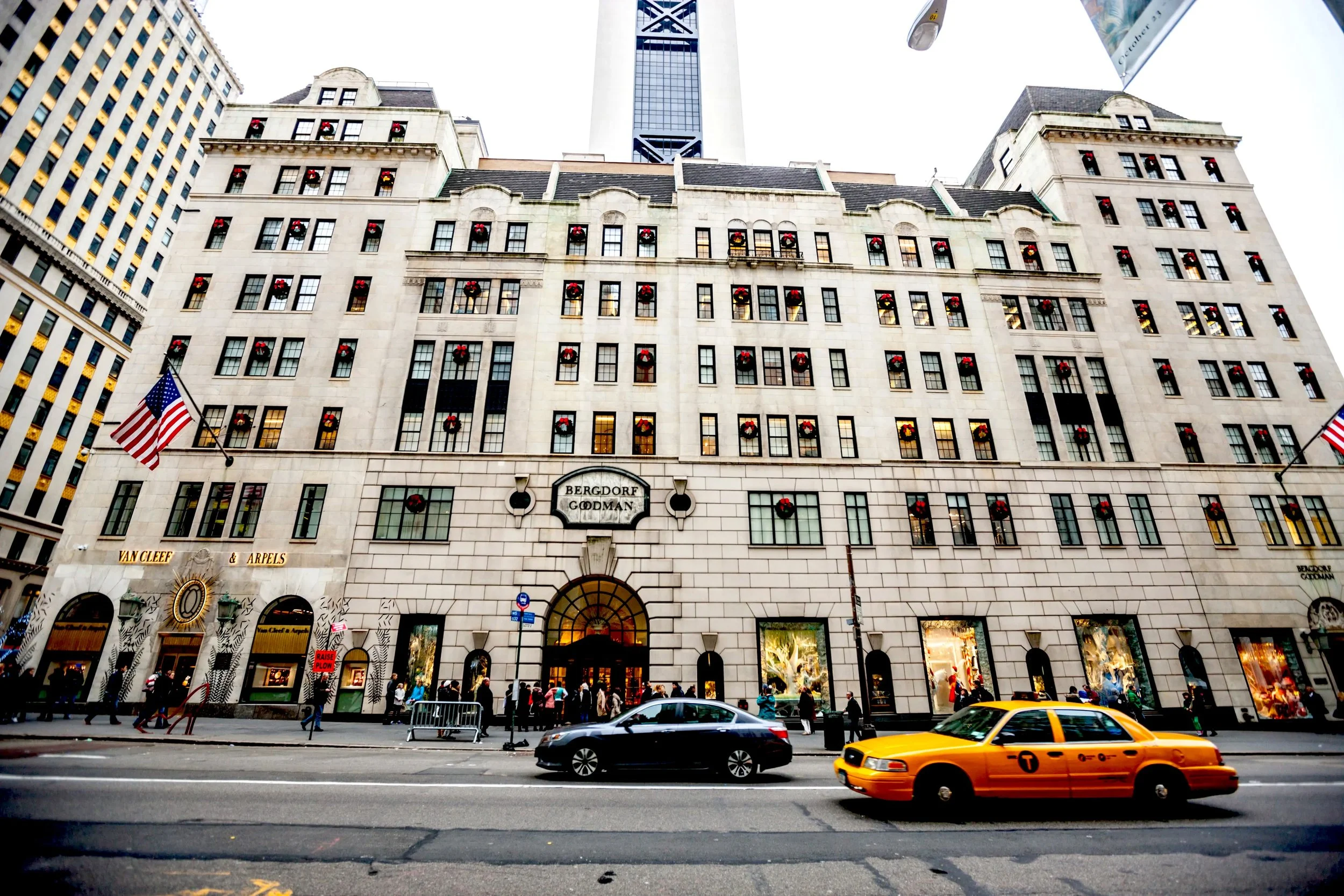
Today, the block is fronted by Bergdorf Goodman.- Photo: Conde Nast Publishing
The block was redeveloped and eventually became the site of the Bergdorf Goodman building. The demolition of the Vanderbilt chateau became one of the period’s most lamented losses of Gilded Age architecture.
Every real estate transaction in this city sits on layers upon layers of fascinating history, and understanding those layers is part of my approach.
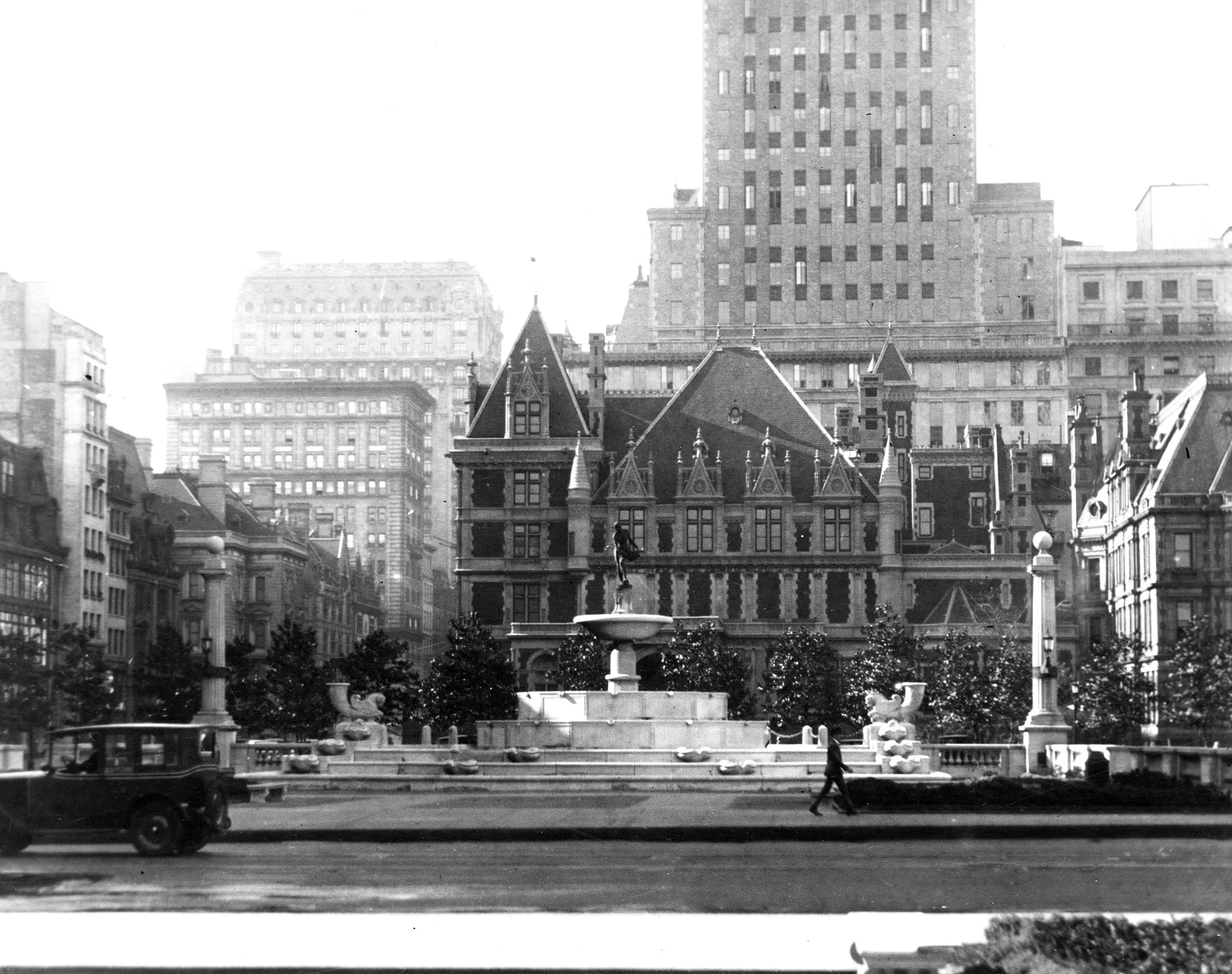
Photo: NYPL Digital Archives
I wanted to close with my favorite photograph of the mansion. Fifth Avenue still feels quiet and residential as the morning sun rises, but in the distance, the skyscrapers are already beginning to appear. The New York that would eventually seal the mansion’s fate is slowly closing in.